
Amak Iquitos: Peru’s Ultimate Eco-Lodge Experience
A visit to the Peruvian Amazon River starts in the city of Iquitos. Located in the north-east corner of the country, Iquitos is the largest city in the world that cannot be reached by road, and must instead be reached by boat or plane. The Amazon River begins in Peru and crosses through 9 countries before dumping into the Atlantic Ocean. It feeds the Amazon Rainforest, which covers over 40% of South America. The Rainforest is home to 10% of all biodiversity on earth, and is a treasure trove for medicinal plant life.
Colby and I traveled to Iquitos in April as part of our tour around Peru. Although this is towards the end of the wet season we felt the weather was great! It did rain a bit, but we expected as much since we are, after all, in a rainforest. The days were cooler than the summer months and the water levels were perfect for spotting wildlife…especially the elusive pink dolphin. April is also a less touristy time to visit since it is a shoulder season, so we highly recommend it.
Mornings in Iquitos begin with the hum of the tuk-tuk army- hundreds of tricycle motorbikes zipping around with passengers and cargo. Shouts from locals mix with chirping birds. The sticky dawn is full of possibilities as the world yawns awake. Just after breakfast, the staff from Amak Iquitos picked us up for a quick stop at the CREA Amazon Rescue Center for injured animals, and then our adventure truly began.
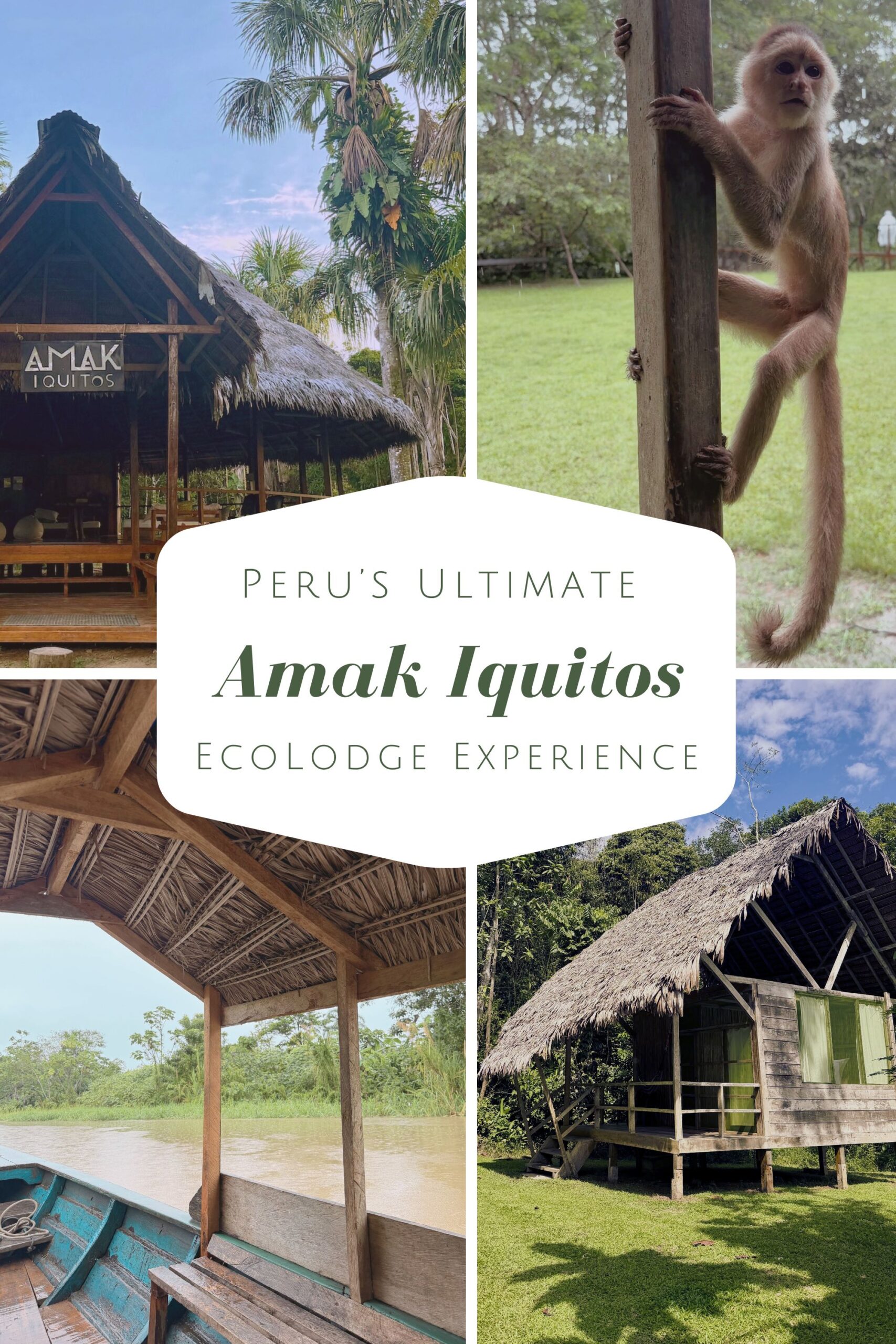
Amak Iquitos is an all inclusive eco-lodge that focuses on authentic and sustainable Amazon experiences which cultivate meaningful travel. They have a commitment to regenerative tourism, protecting the flora and fauna of the jungle, and supporting active local communities while honoring their culture.
The Accommodations:
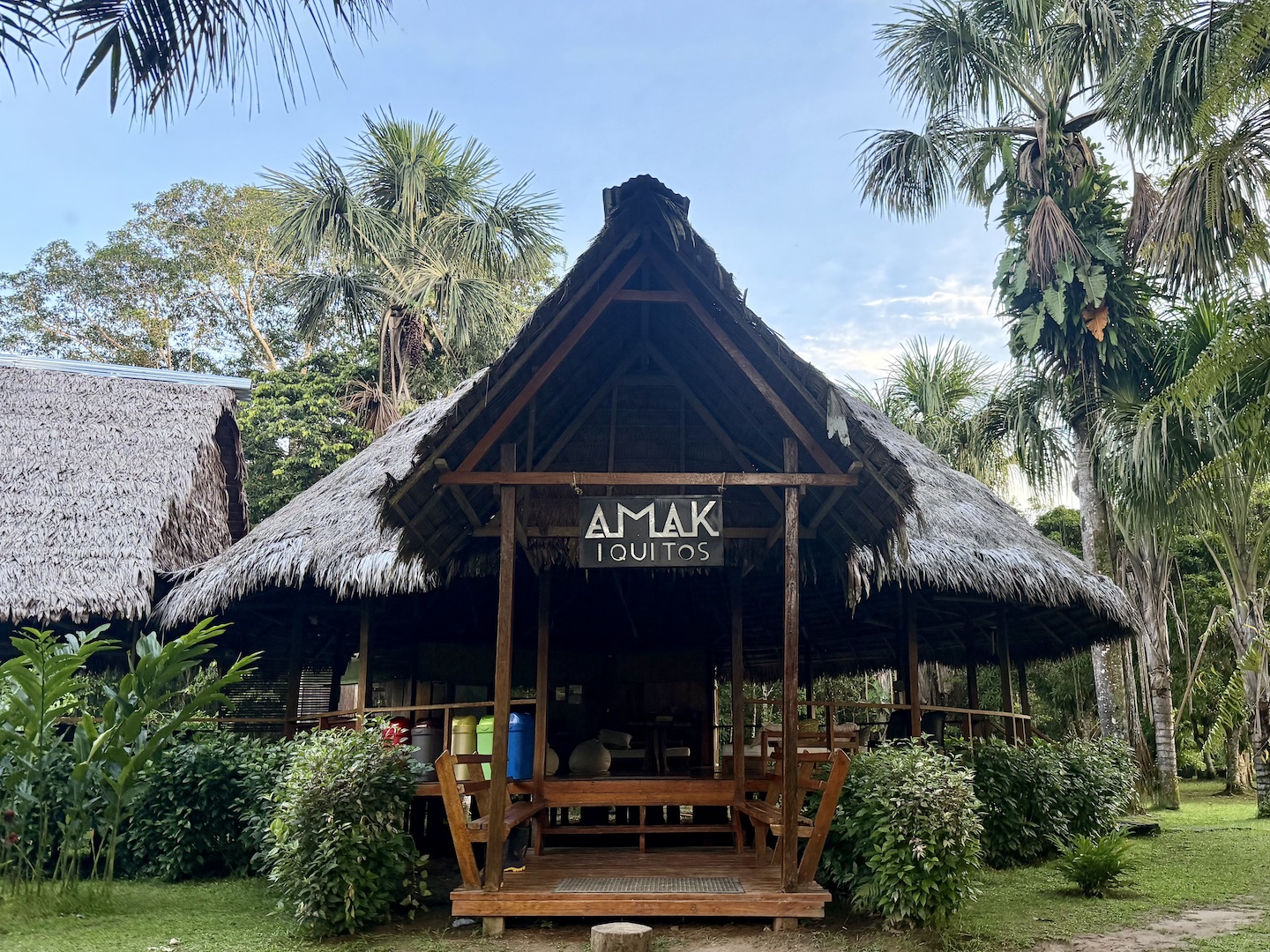
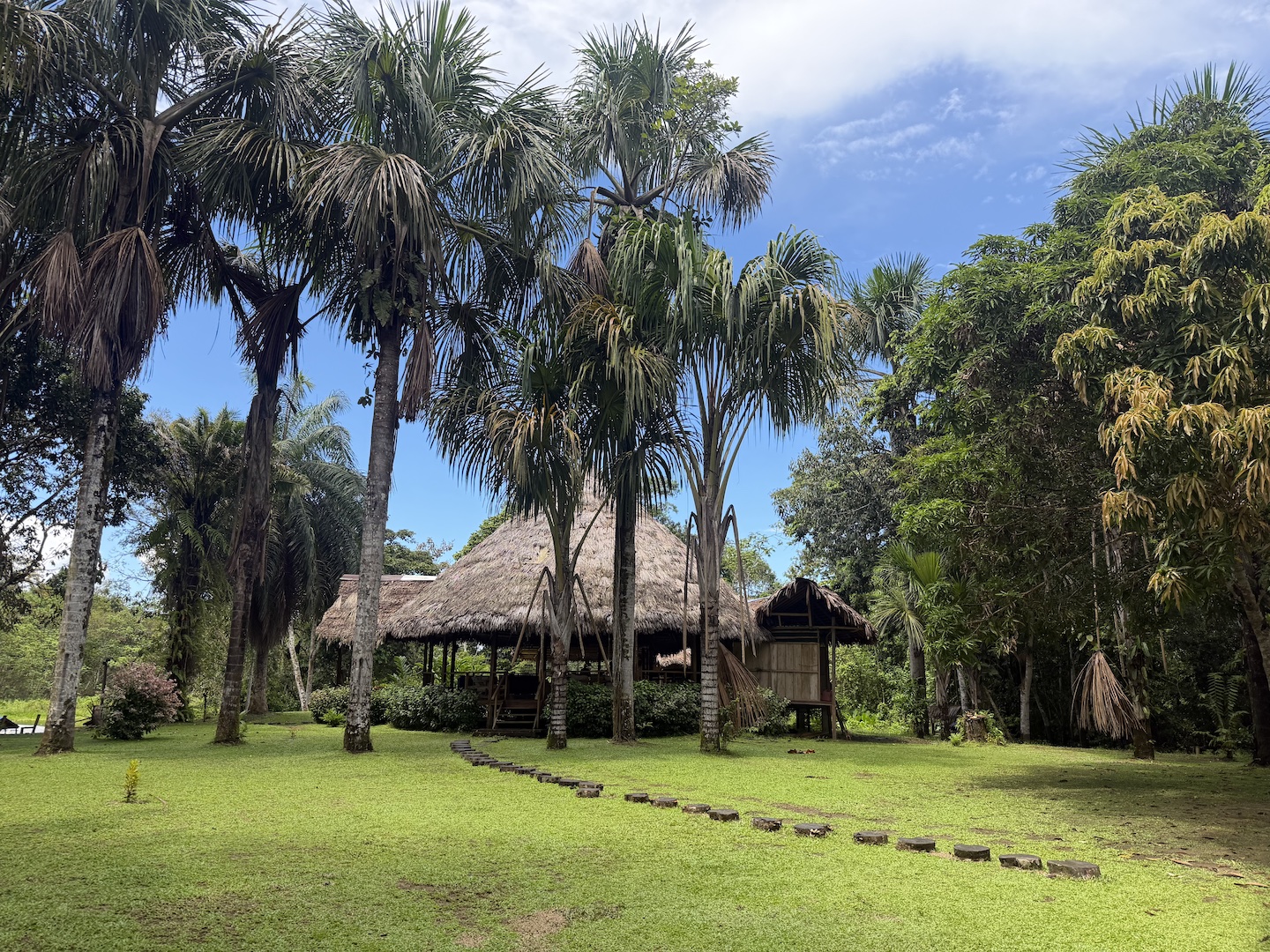
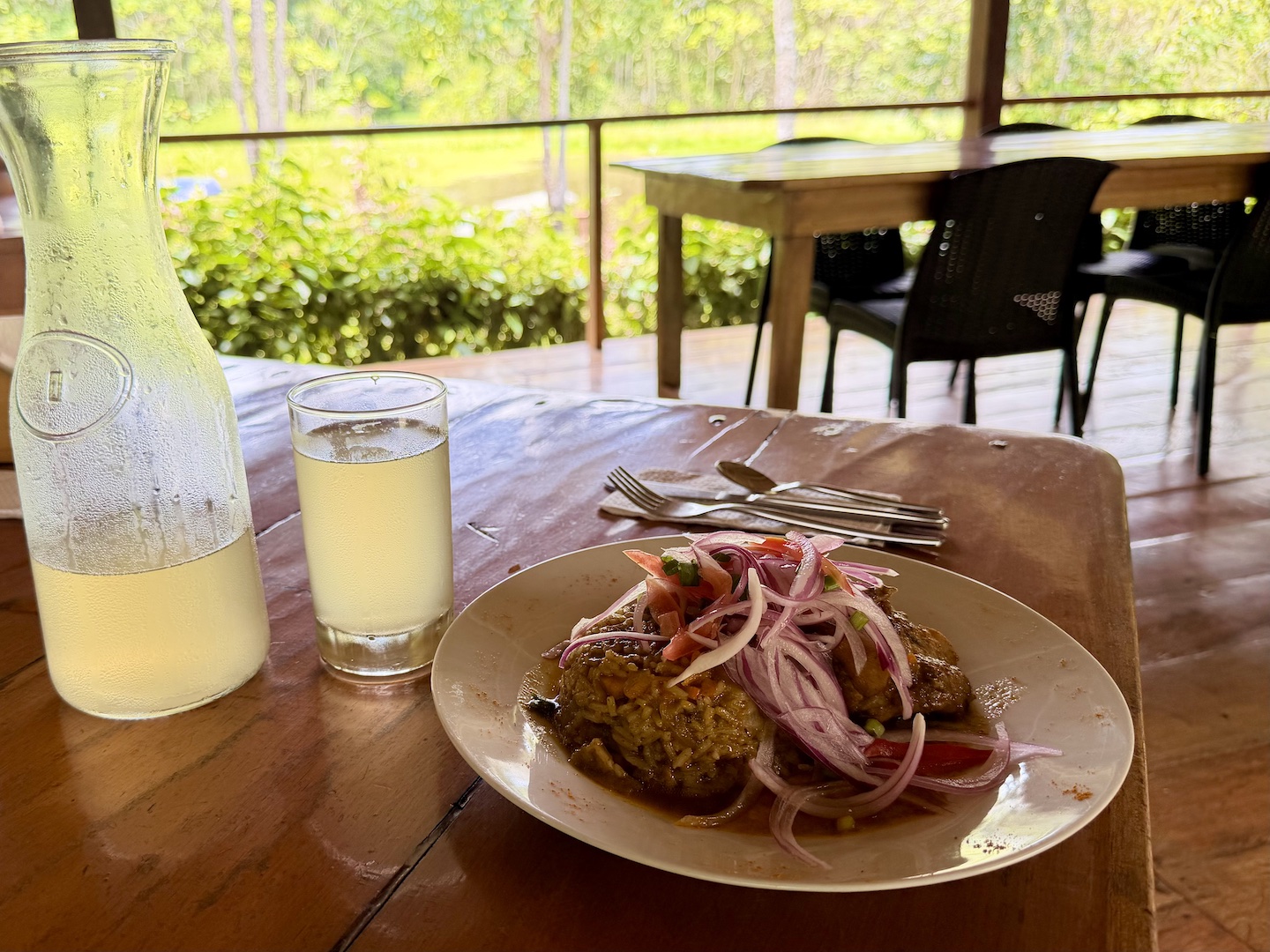
Upon arrival at the maloca, we were greeted with refreshing lemon water, the glass already condensating in the humidity. It was a welcome treat as we were given introductions to the staff and property. This was a completely immersive experience with nature. From the moment we arrived, we were surrounded by vibrant greenery, the sounds of birds and insects, and the pulsing rhythm of the forest.
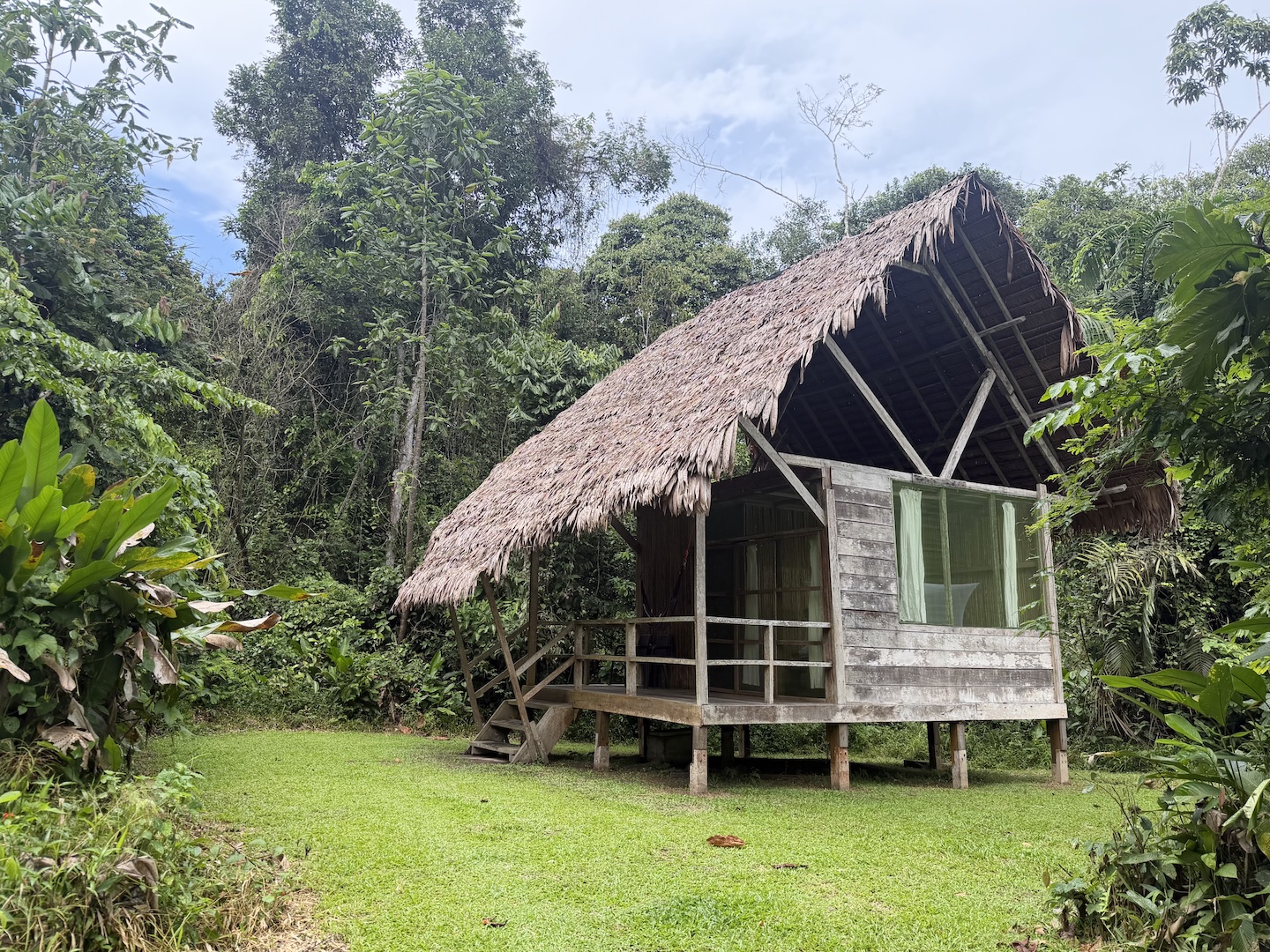
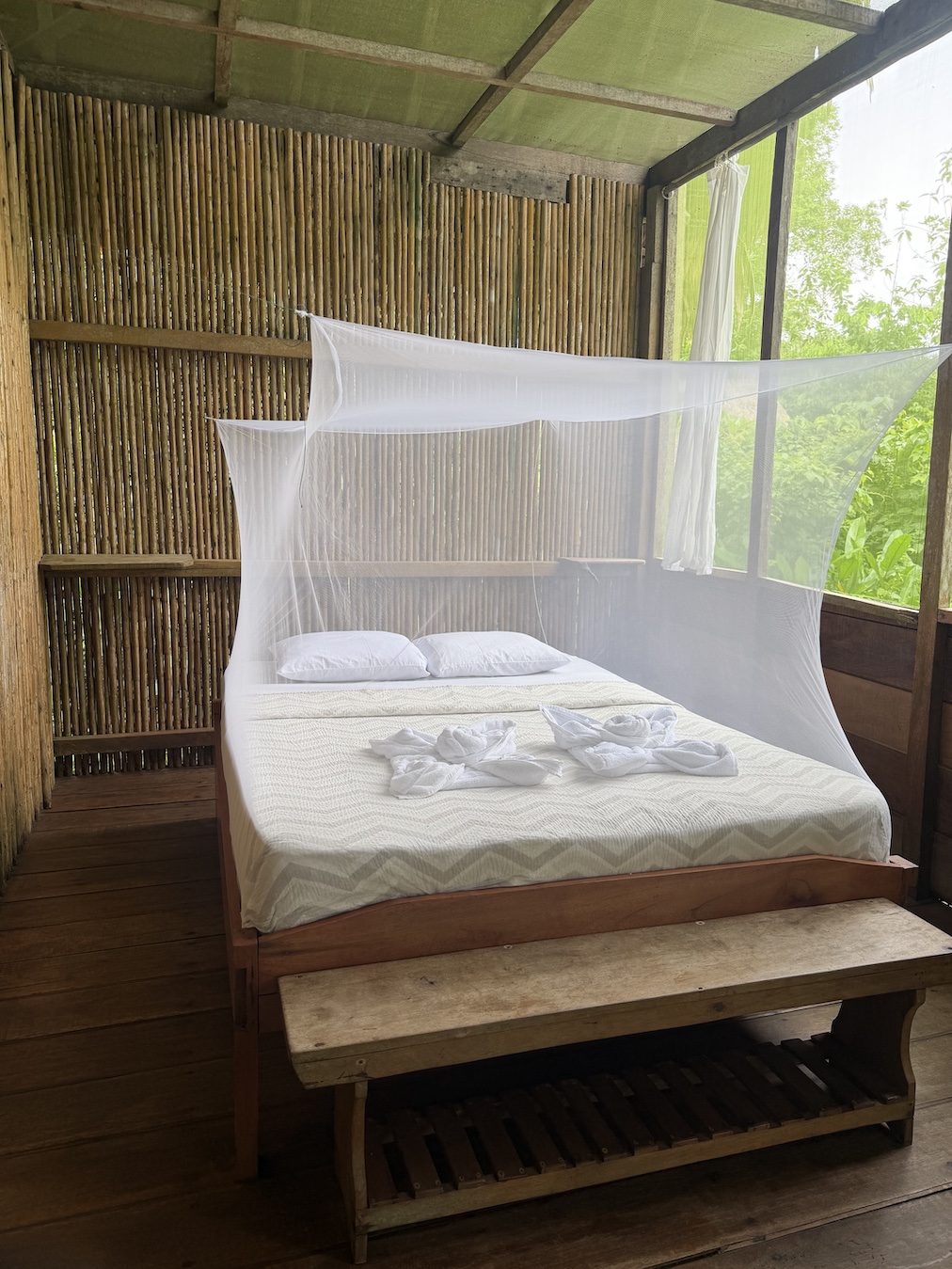
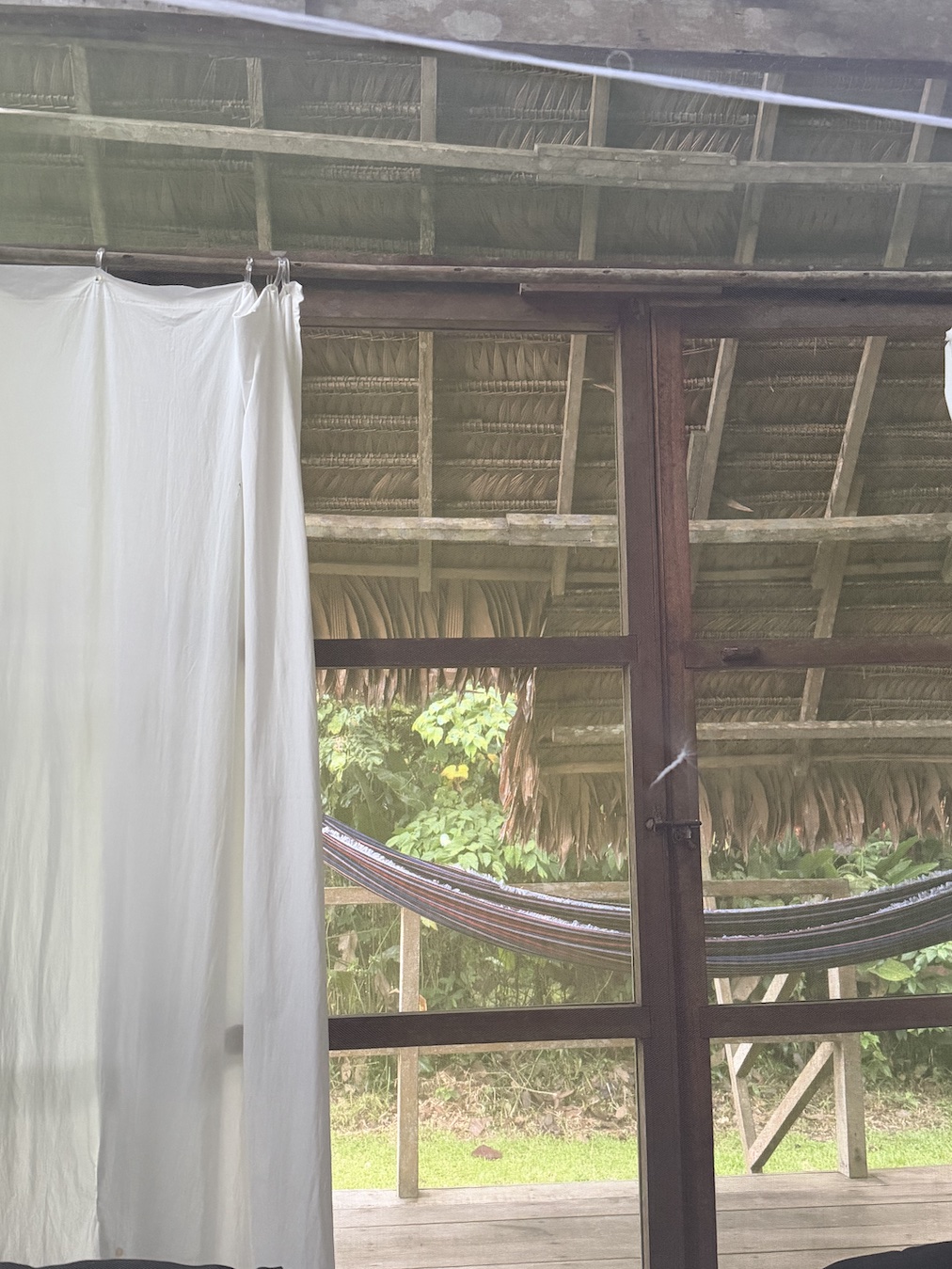
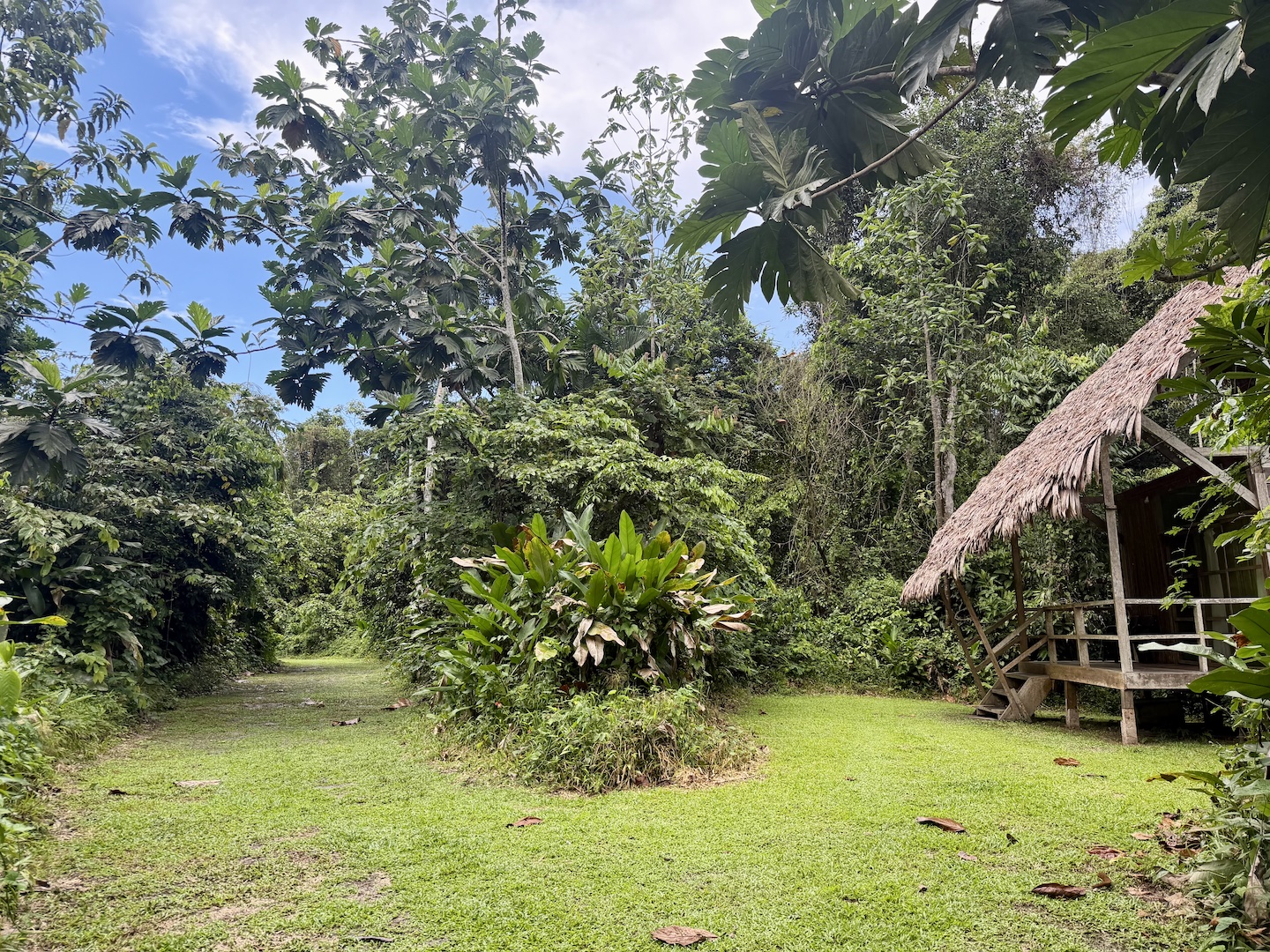
A short jungle walk brought us to a rustic elevated cabana with a palm frond roof and a hammock swinging on the front porch. The cabanas are made up of wood, bamboo, and other jungle materials.The breeze tickled airy white curtains through the large screened windows. Beyond them, a panoramic view of the rainforest canopy awaits. The space was clean and tidy, with fresh bedding and towels provided. A comfortable mattress was shrouded in a mosquito netting and citronella candles were offered. The cabanas have running water with a sink, toilet and shower, although there is no hot water. Even though they are basic, they are very comfortable and perfectly blend in with the surrounding world.
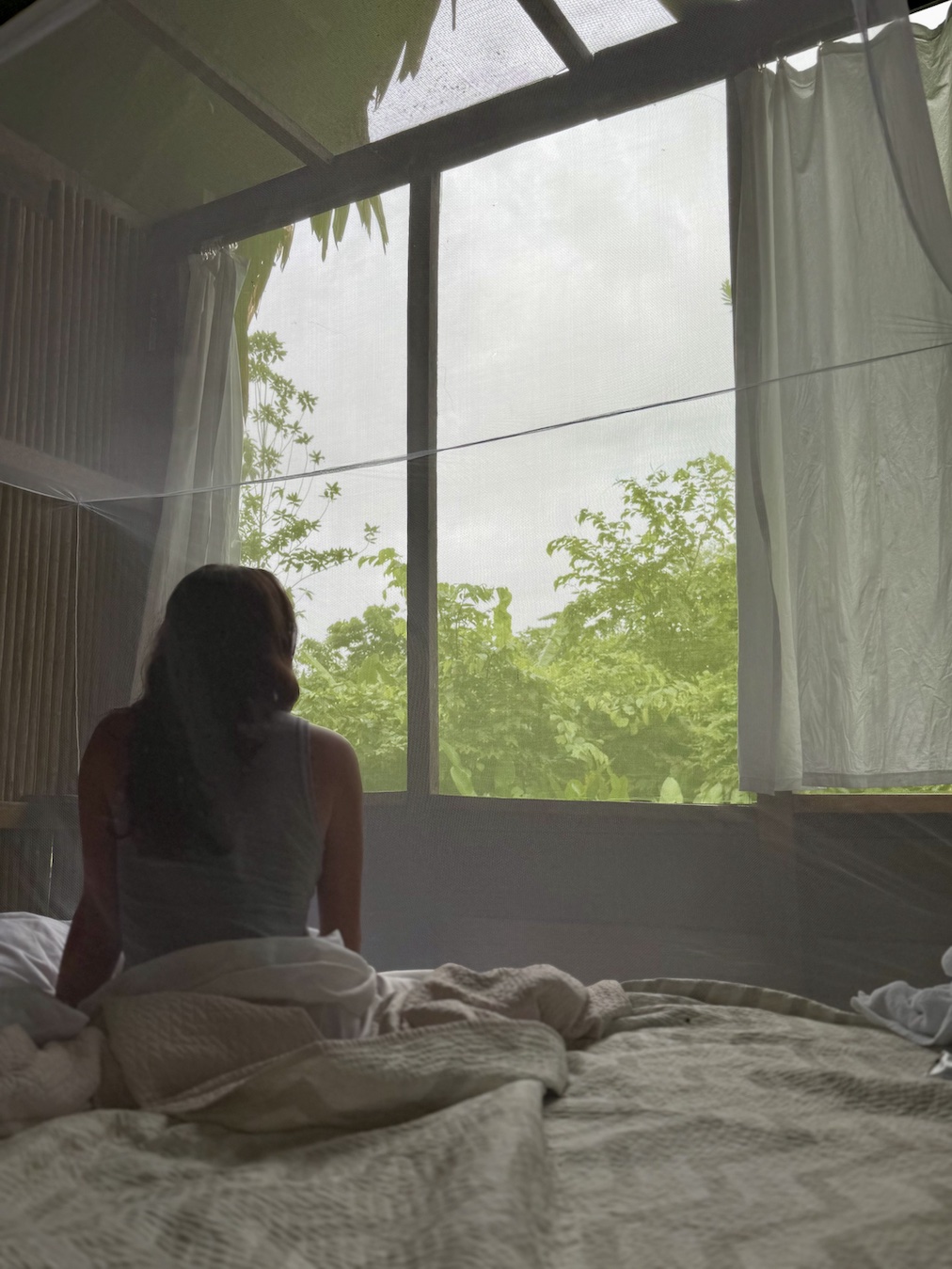
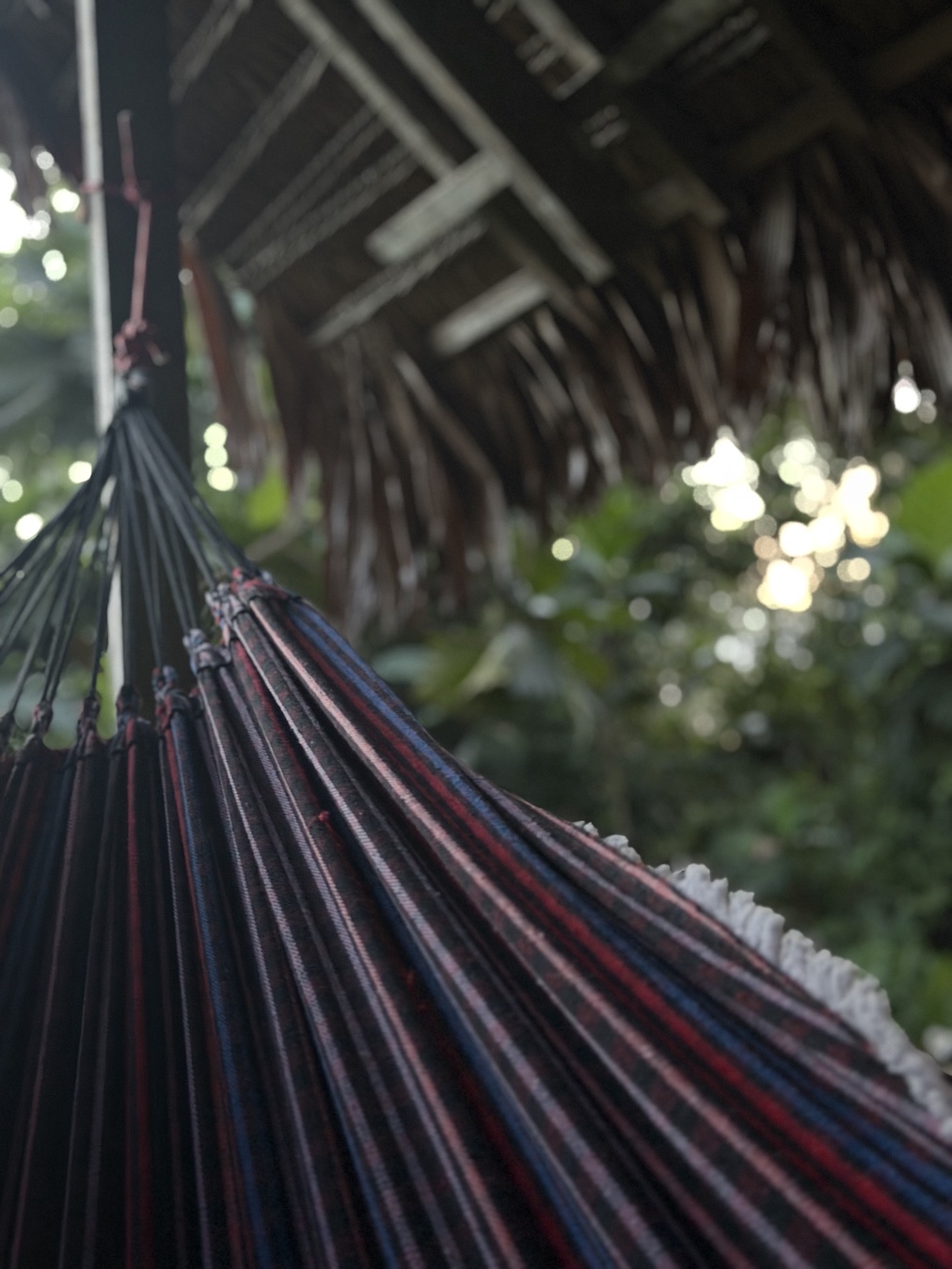
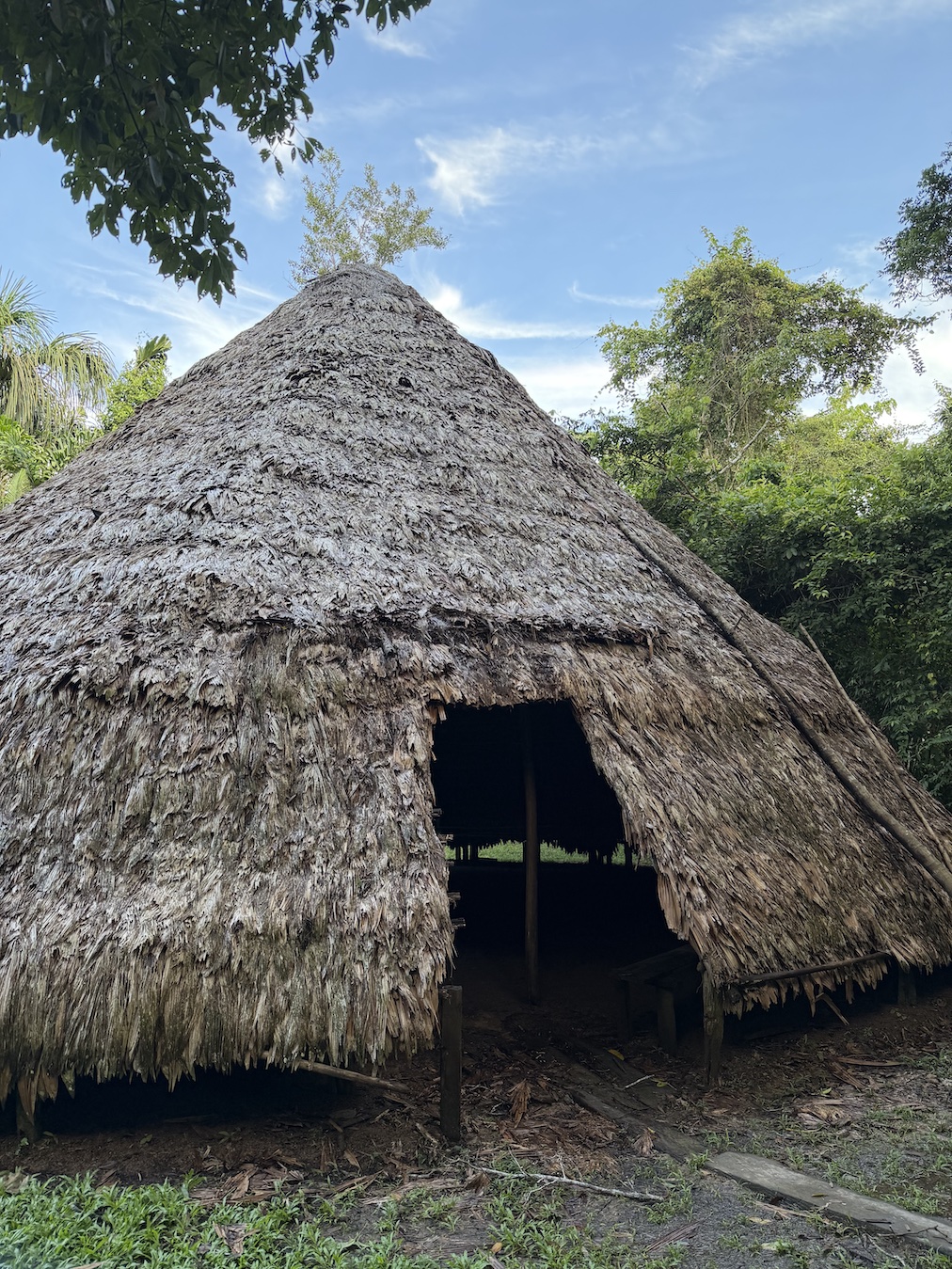
After settling in, lunch was served. The maloca, or round house, offers several perfect lounging couches to rest for a nap in the soft breeze. I woke to find monkeys frolicking in the trees overhead. It was really a place to slow down and unplug.
The days quickly took on a gentle pattern of lovely food, a fun morning excursion, followed by more yummy food and rest, and an afternoon excursion before a fine dinner. The flow of the itinerary allowed for plenty of interaction with the jungle and equal amounts of down time for relaxation and observation.
Power and wifi were provided at scheduled intervals throughout the day, typically around meal times. We felt the amount of time we could charge our electronics and check in with the outside world was more than adequate, and only enhanced our stay.
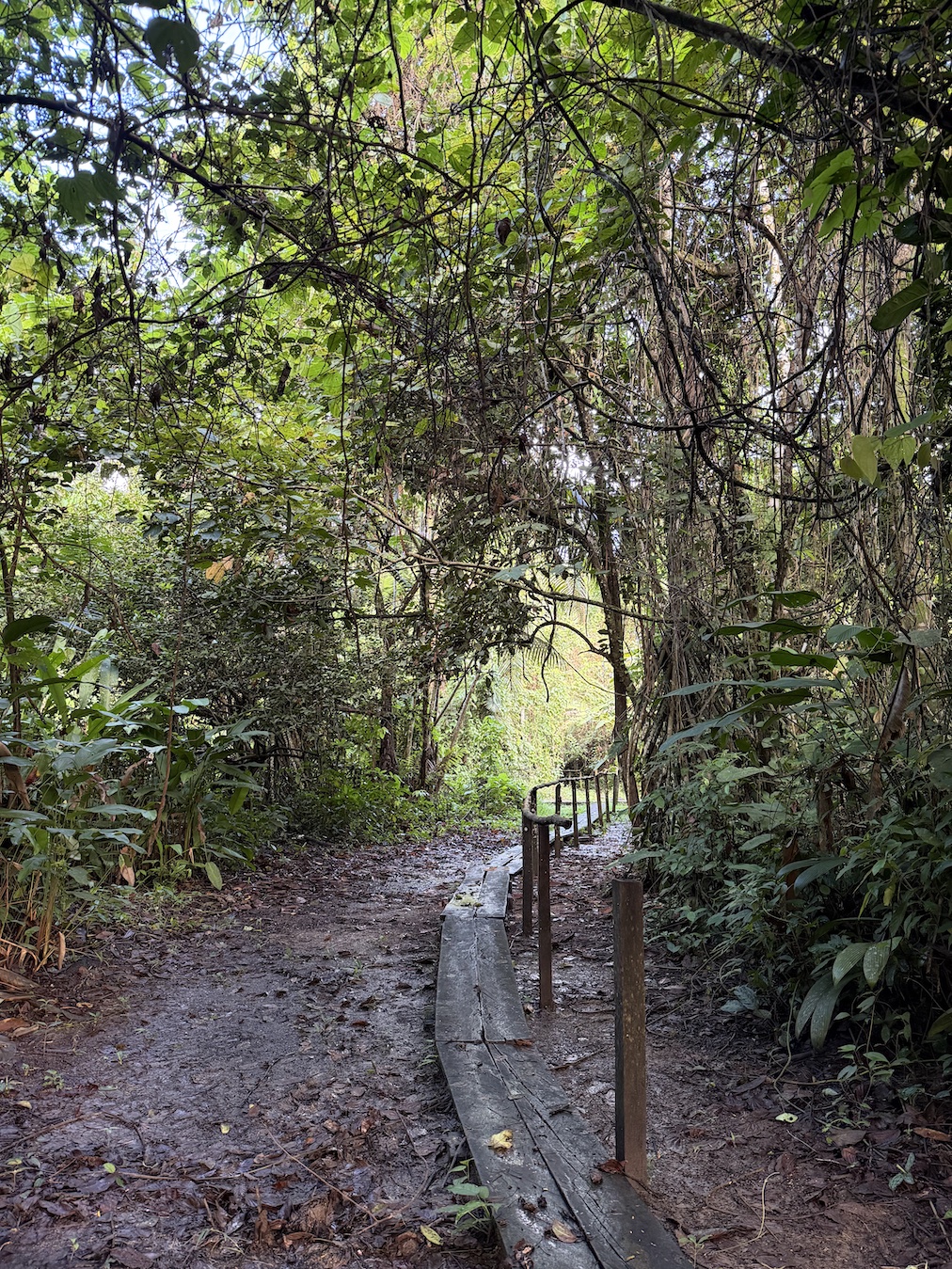
The grounds consist of 22 secluded cabanas and a spacious common area. There are several fire pits and ornamental tree groves throughout the green lawns. Well maintained walking trails allow for easy and safe exploration of the property, with plenty of natural wildlife around.
The Excursions:
The extensive services included in the room rate far exceeded the price of the stay. It was a full experience, both spending time in local communities and observing diverse wildlife. There were a number of interesting tours and excursions to participate in, and the staff was always friendly and accommodating. Carlos was a fantastic tour guide that spoke good English, so we were lucky to spend our trip with him.
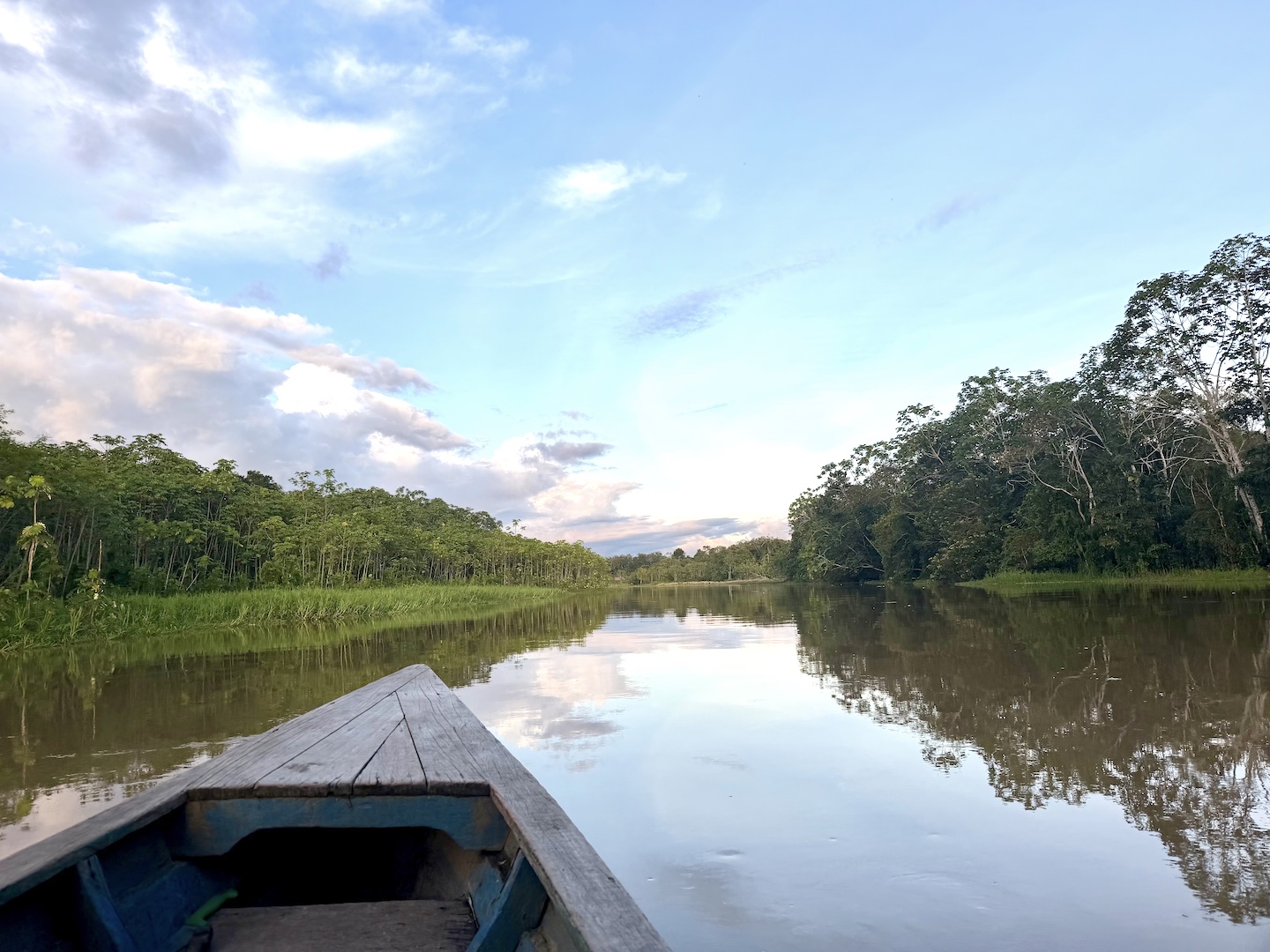
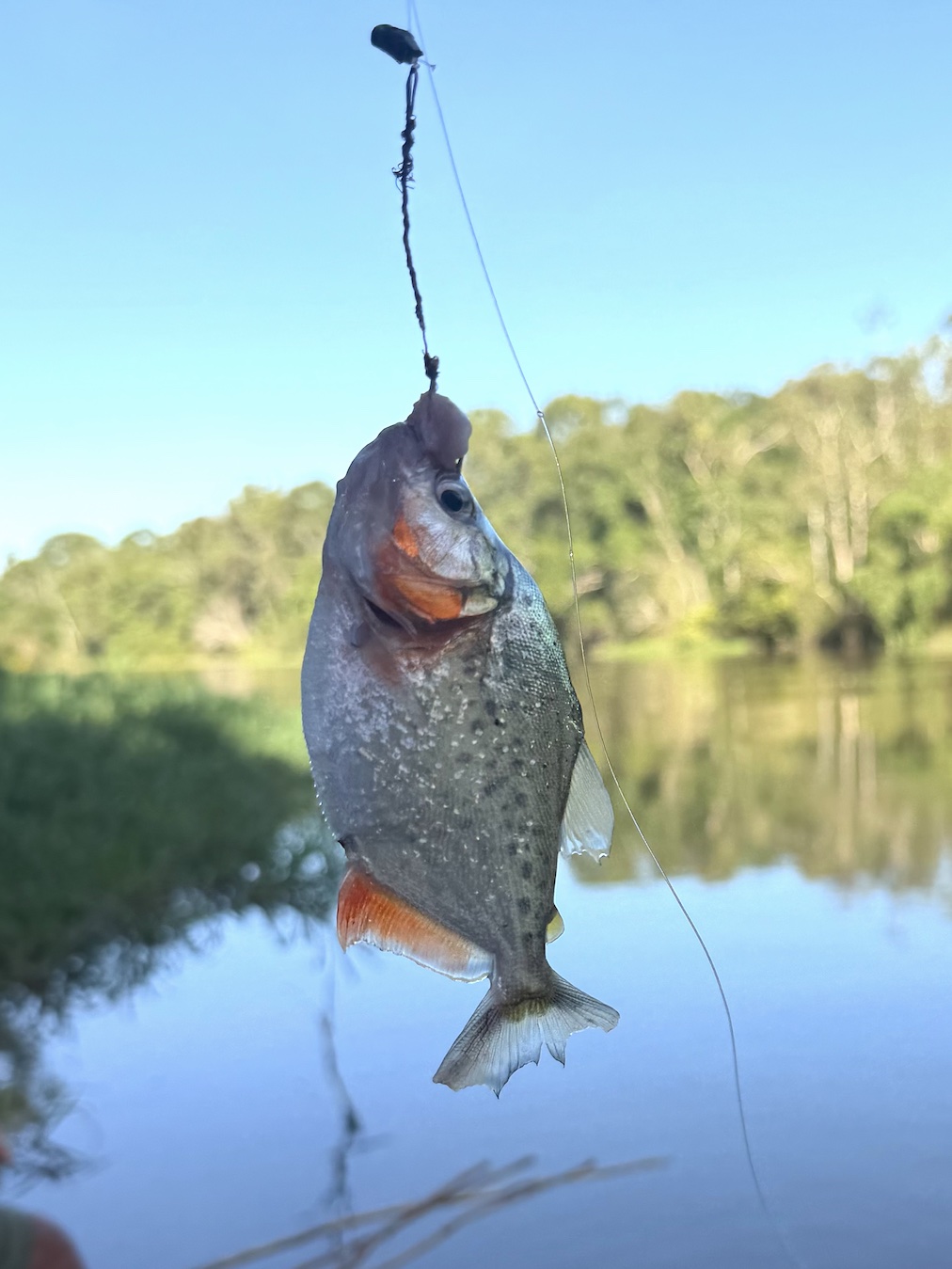
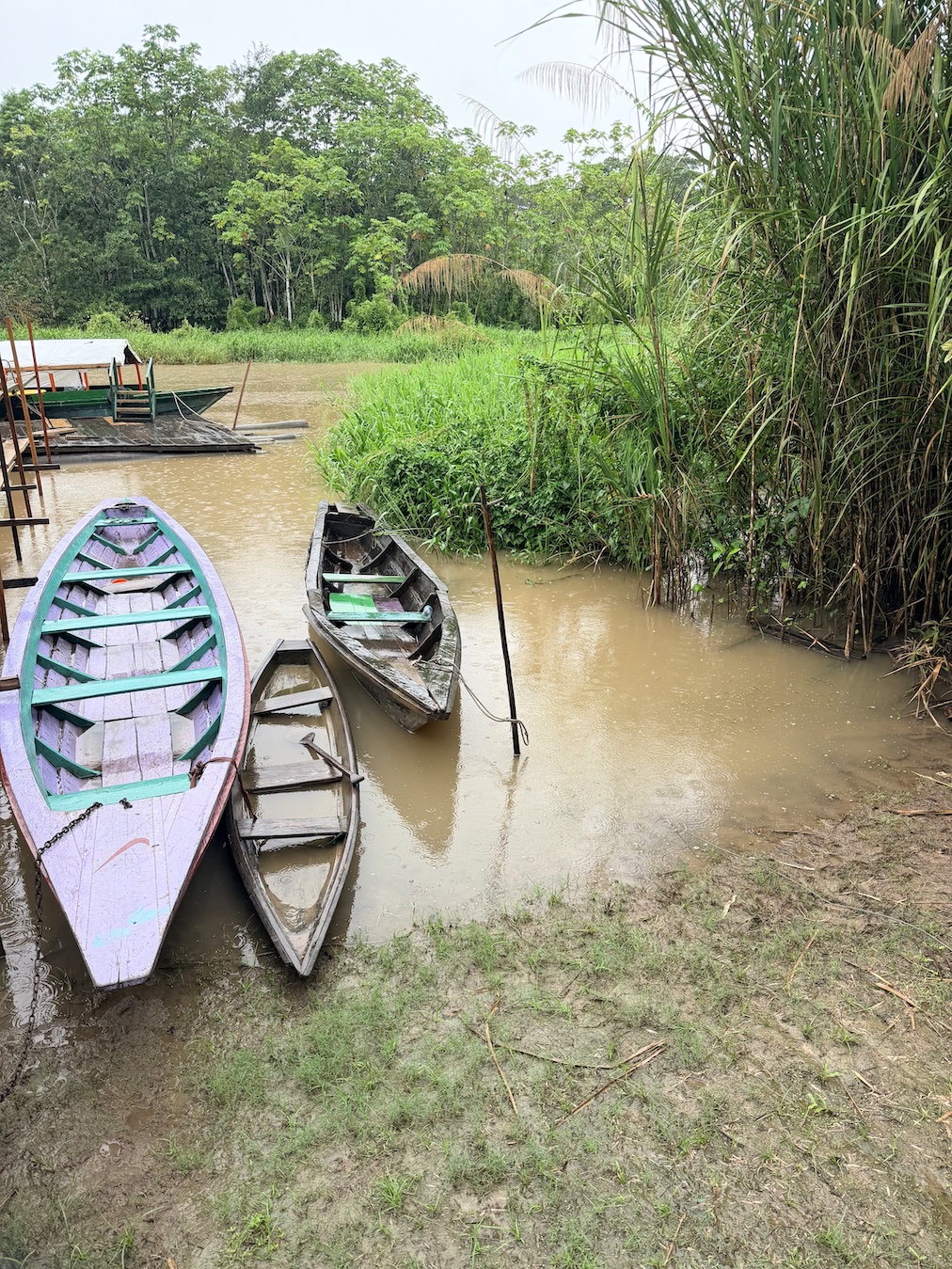
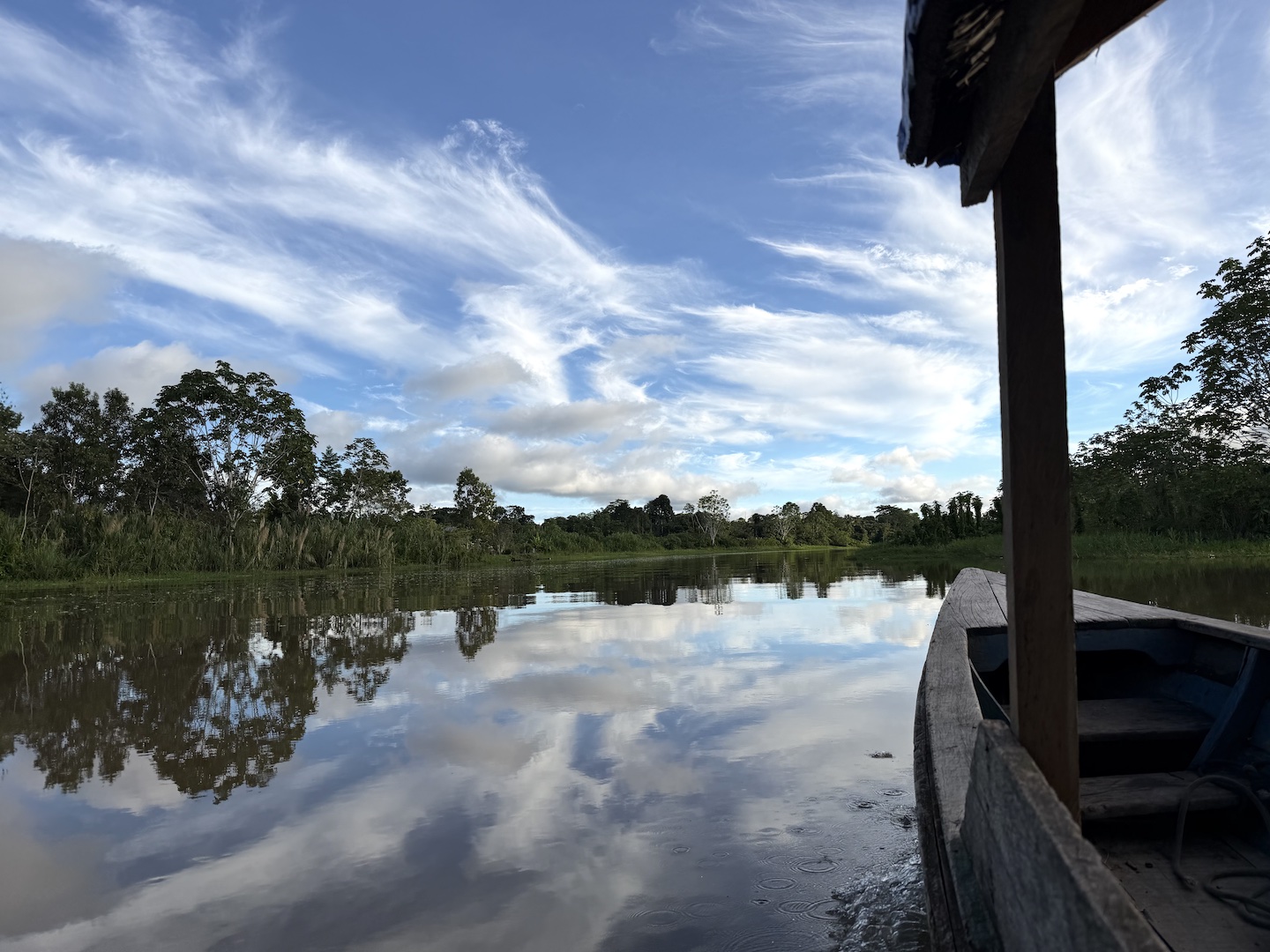
Each day included a dreamy Amazon River cruise, as you meander towards a destination. On our first day, Carlos took us piranha fishing and pink dolphin spotting. Colby caught several piranhas and shark fish, and I was thrilled with my first glimpse of an Amazon pink river dolphin!
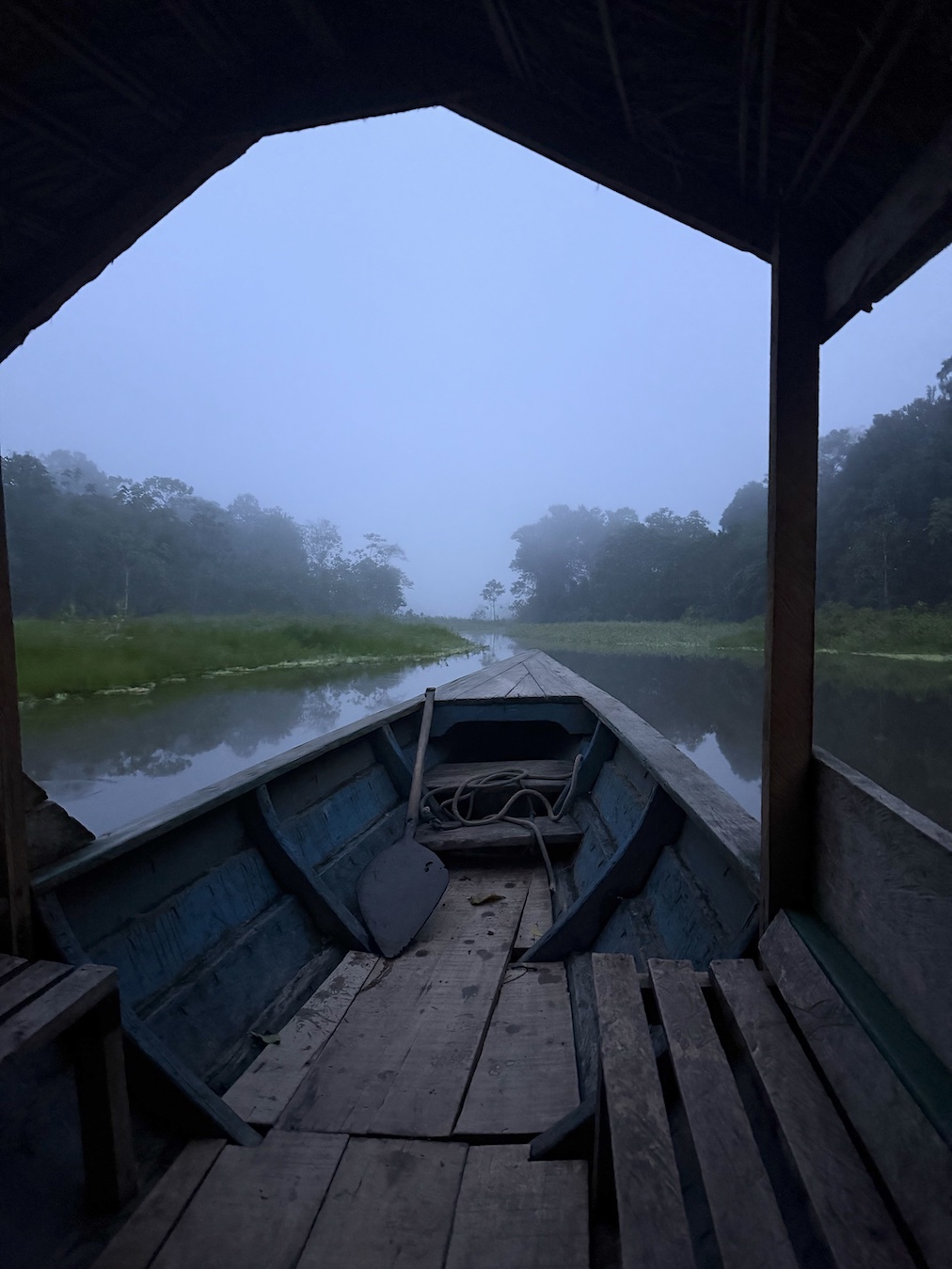
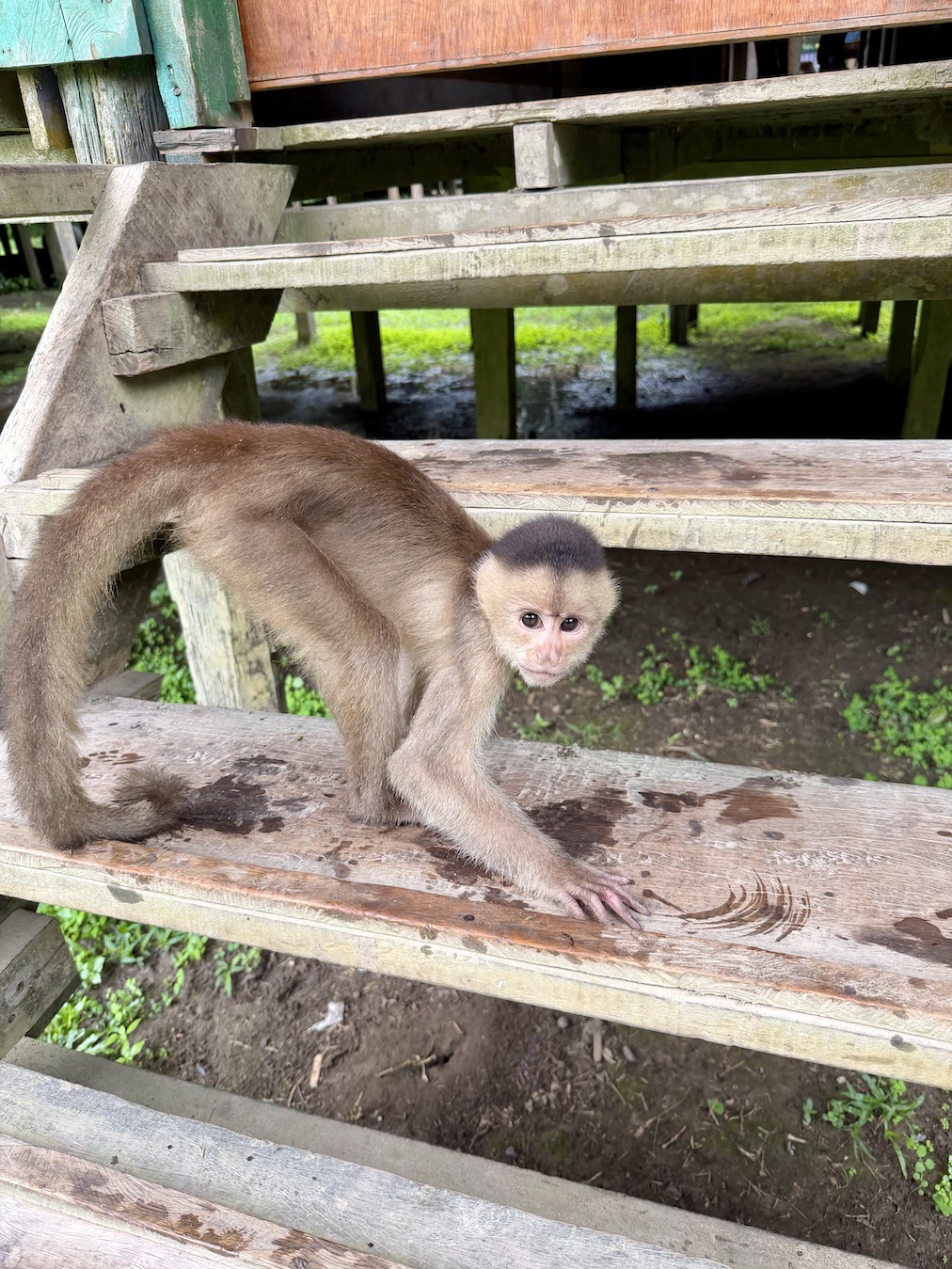
The next morning, we woke early for sunrise on the river and bird watching. I had heard people say that they became more interested in birds after visiting the Amazon and I snickered at them. Alas, it is not to be helped- and we are now amateur birders! The quantity and diversity of bird species in the Amazon is astounding, you can’t help but fall in love with the tall white Egrets, garbage hawks, tookie tookie’s, and dozens of others. We were greeted back at Amak with a hot breakfast, and then a trip to Monkey Island. We were interested to learn about the conservation efforts of the monkey preserve and so thrilled to get to interact with the monkeys up close! After lunch, and a rest, we got to visit a Yahuas indigenous village and hear about their culture and customs.
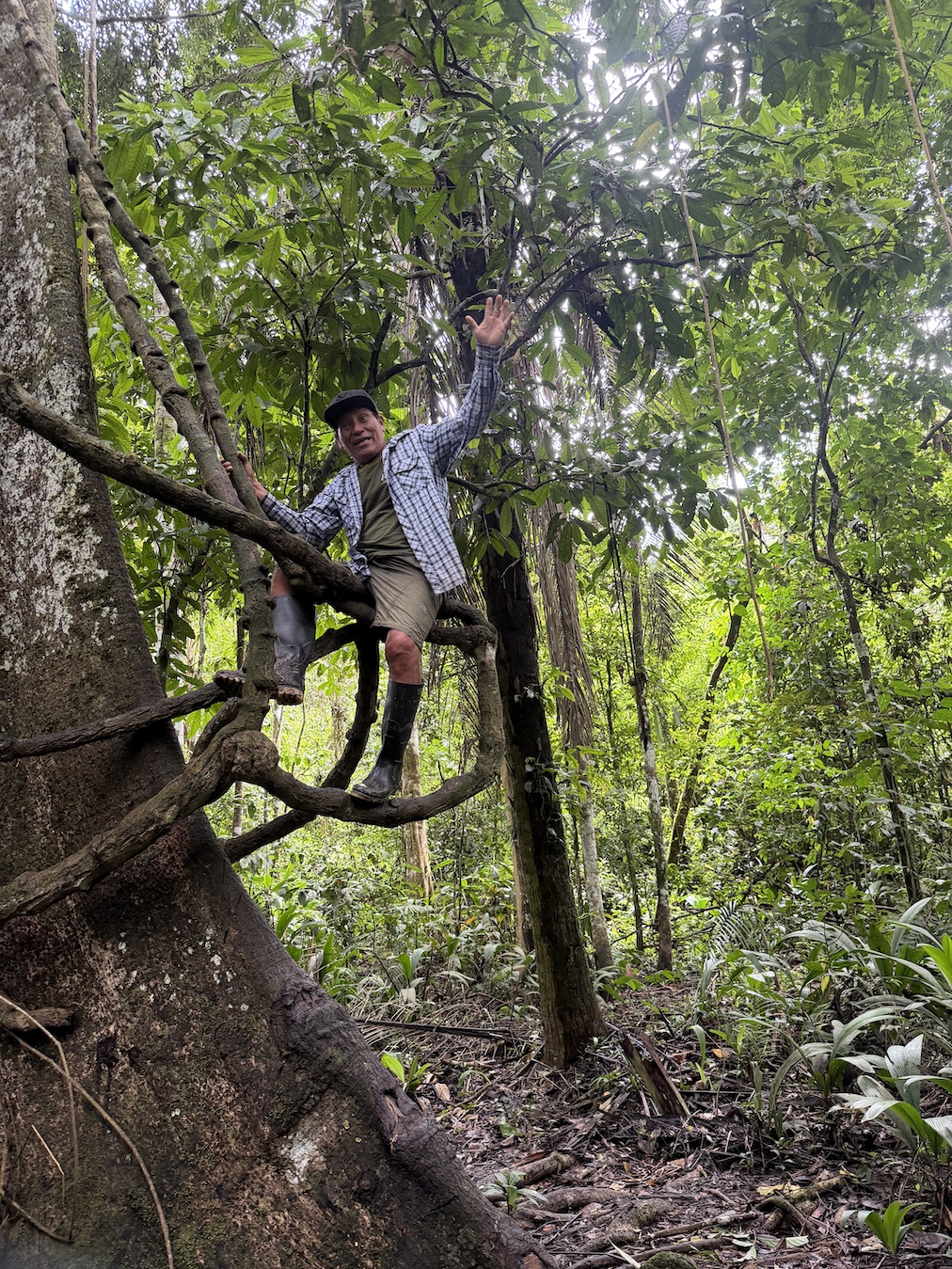
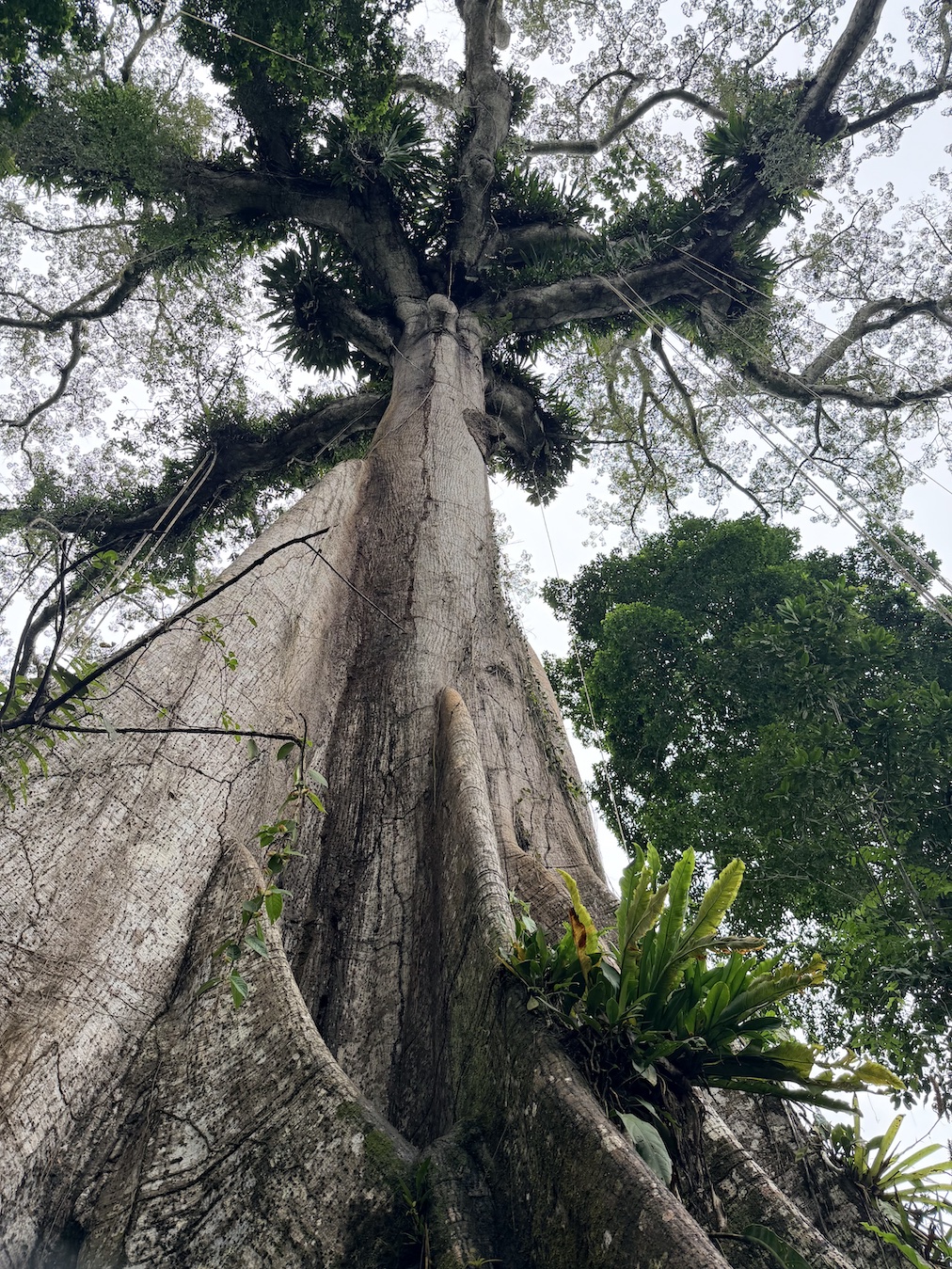
Another day we navigated the Black River to the sacred Seiba tree deep in the jungle. The locals also call this tree a Lupuna, or ghost spirit tree, because they believe the energy in the tree can help guide and protect them. Legend teaches that you must ask the jungle for what you seek, not take what you want, otherwise the ghost spirit may transform into an animal or person and lead you to your demise. Later that afternoon, we visited an Amazon River Village and got to interact with some of the locals. It was interesting to see how they work and live, and they were very welcoming towards us. In the evening, we took a nighttime jungle walk and discovered the species that emerge in the darkness. There were plenty of frogs, spiders, centipedes and bugs.
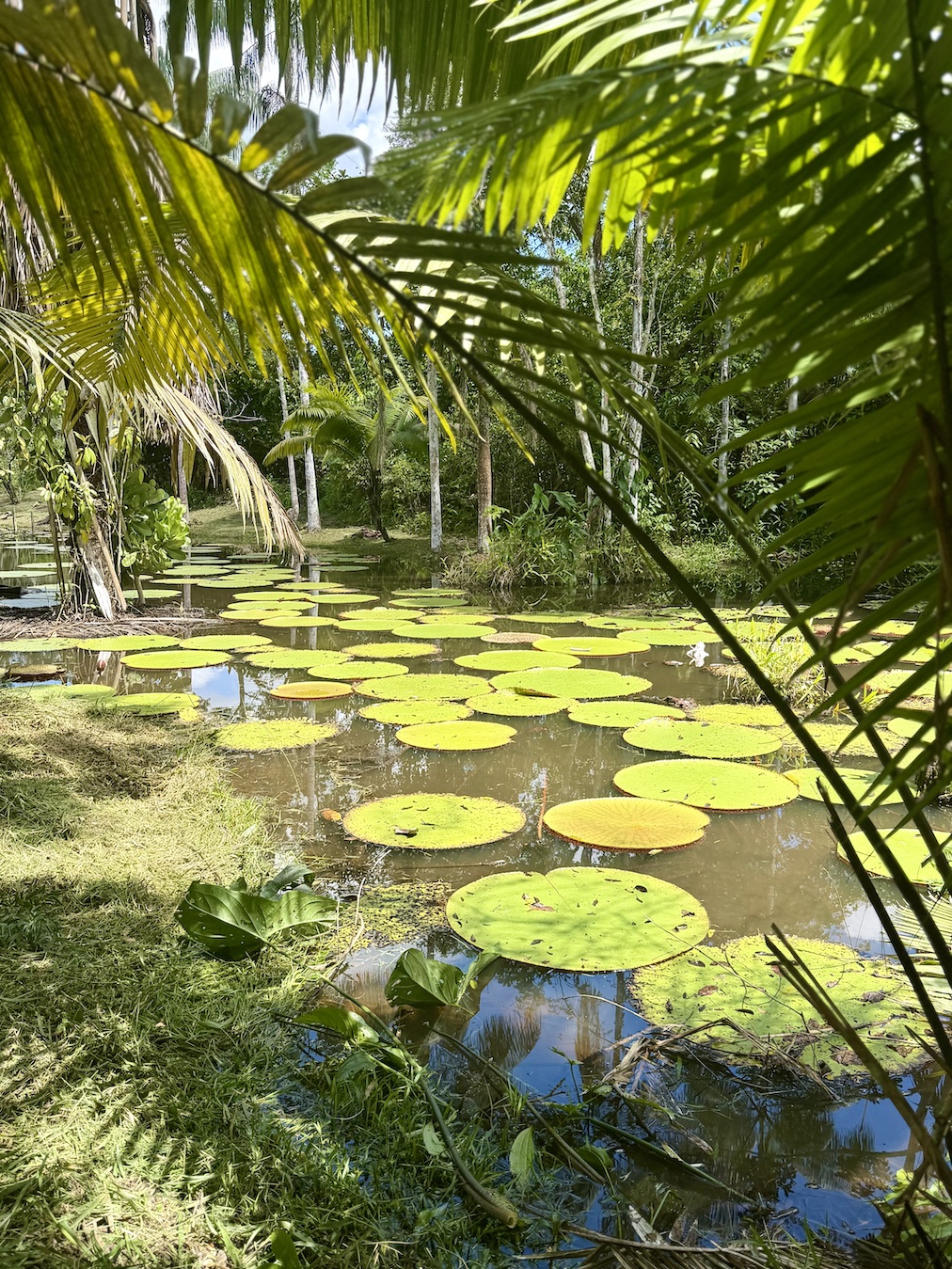
On our final day we visited the ponds and lakes that support the giant Amazon lily pads, followed by swimming in the river. After witnessing the wildlife in the river all week it took some courage, but I did finally jump in. Well, more like slipped in on the slick muddy bank, but either way, I made it in! After our final lunch we navigated the Amazon back to Nanay Market and then on to the airport.
The Food:
The meals served were high quality, fresh and varied in options. A hearty breakfast included eggs, bread, fruit and sometimes a meat. Lunches and dinners offered different kinds of proteins with vegetables and a rice, potato or plantain dish. Fresh fruit was served as dessert, and our favorite drinks were the refreshing lemon water or chicha morada. Bar services were also available for an additional fee.
Some of our favorite dishes included the chicharrones with cilantro rice and vegetables and the meatballs with potatoes in a tomato based sauce. Every meal was fantastic, the seasonings were authentic to the local customs, but the flavors were not overpowering or too spicy. The theme of each dish paired with the dessert served that evening. Even the portions were spot-on, and we never left the table hungry.
The Ecosystem:
The depth at which we got to immerse in the sensations of the rainforest was made possible by our unique eco-stay at Amak, being so close with the natural world around us. The staff and guides were knowledgeable and happy to point out something new or answer our questions.
Every day brought unpredictable weather. Sunny skies chased away the dawn with waves of sticky heat. Clouds would roll in. Thunder vibrated in our chests and lightning streaked across the sky before a deluge rained down. Then, moments later, the sun would shine again. The humidity was a constant companion, an interesting dance between discomfort and relief.
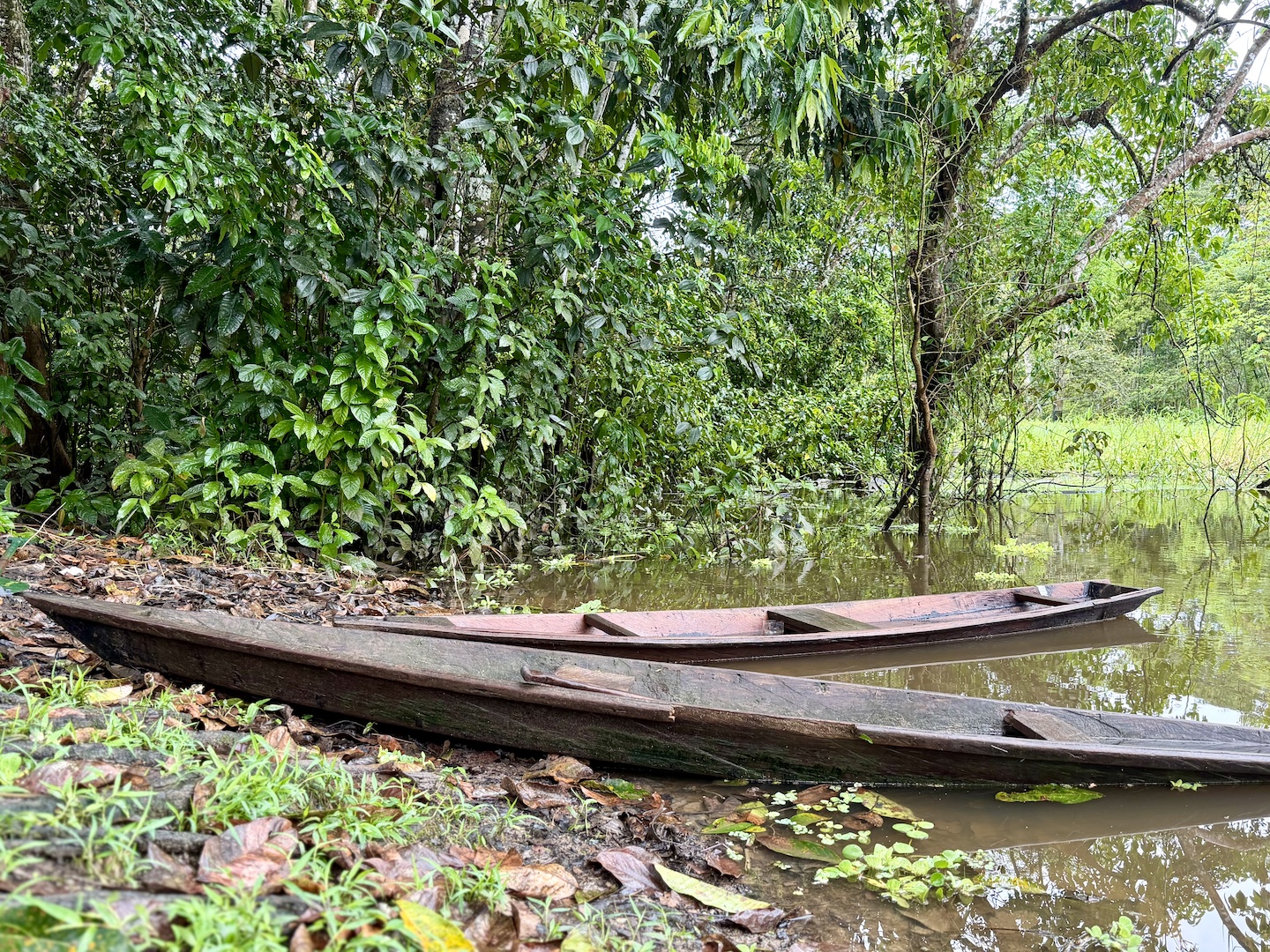
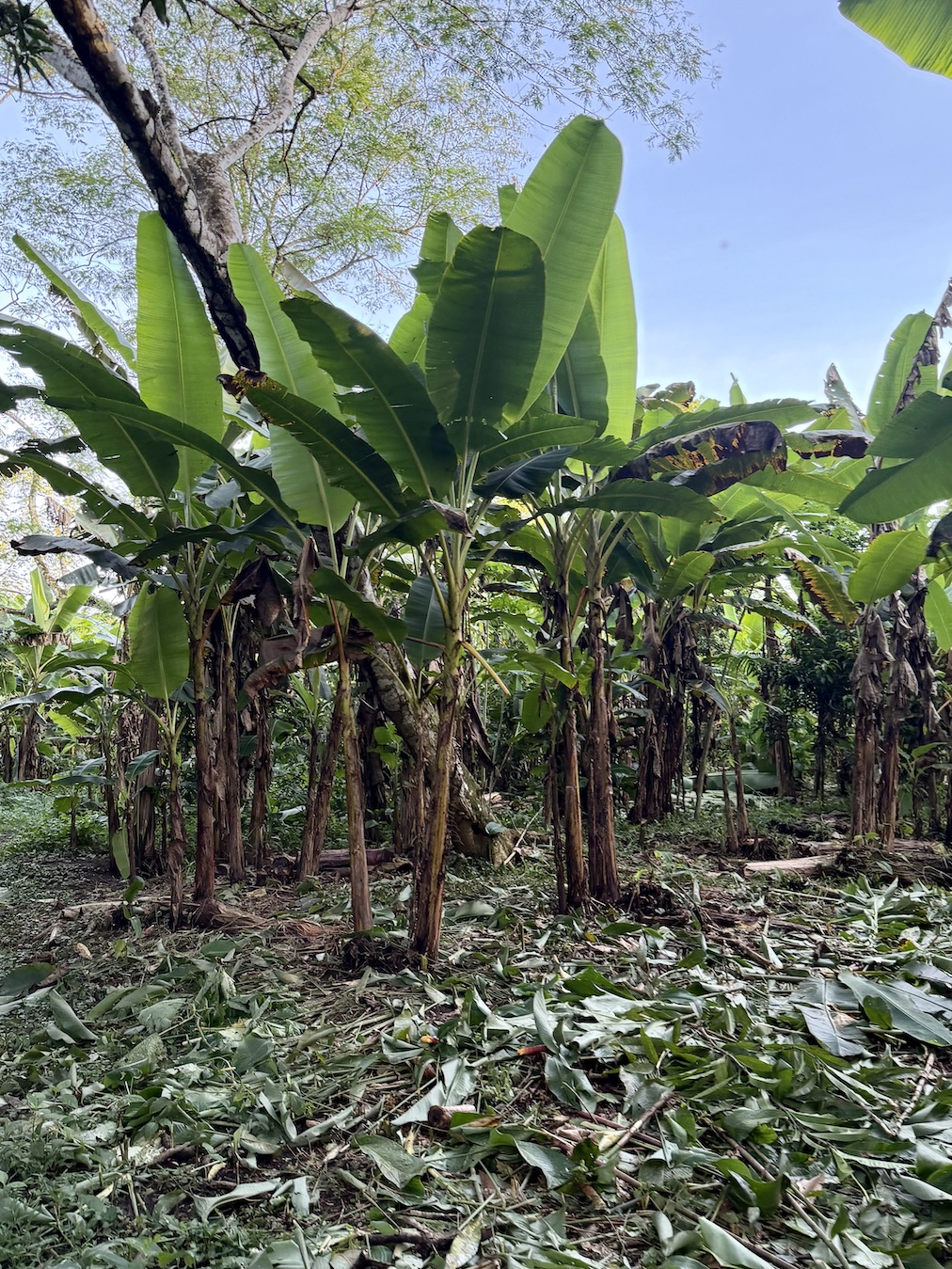
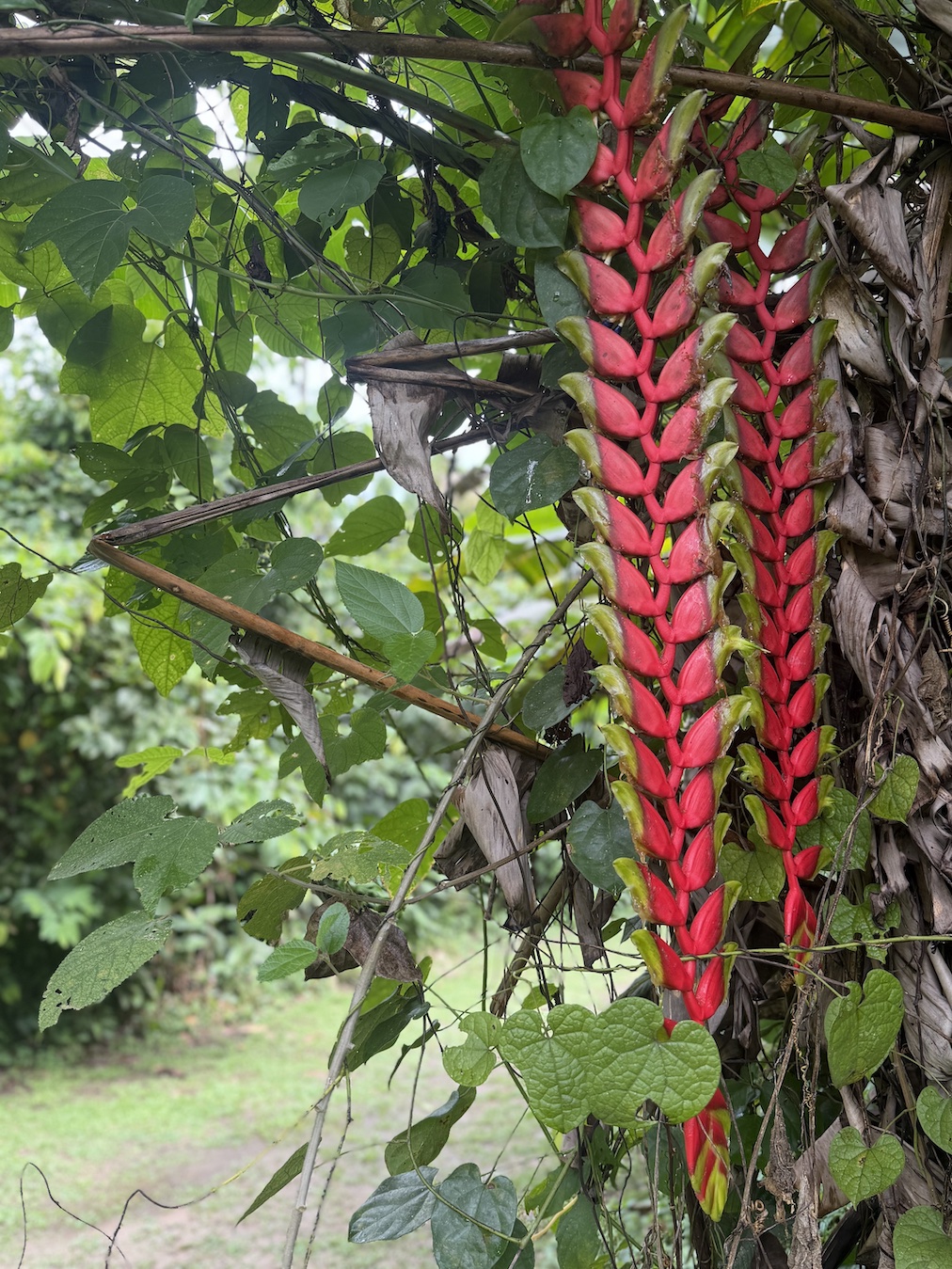
The rainforest is an exquisite blend of greenery. From the huge Seiba and Ficus trees to the tule plants and the river moss, each view was a feast for the eyes. Tropical fruit trees of bananas, mangos and papaya were interspersed with Acai Palms and Cecropia’s. We were excited to learn about the medicinal flora and fauna in the area from our guides. The Santa Maria plant has big, roundish, flat leaves that cools and lowers blood pressure. The Achiote acts as a natural bug repellant. Yarina is planted around homes for protection. There are plants for curing a sore throat and some for treating a fever. Even the vines that make up Ayahuasca could be found commonly. I know we could study for years and still not understand the full breadth of medicinal uses found in the Amazon.
At every moment we were surrounded by a loud cacophony of species. Pink dolphins frolicking in the evenings bursting water from their spouts. Tarantulas as big as my palm and frogs as big as my house cat rustling through the underbrush. Bugs buzzing, humming, whirring and droning on. Birds singing, making sounds like a droplet of water landing at the bottom of a deep well, then cawing and flapping. Kingfisher and weaver birds going about their busy lives. Monkeys dropping fruit down from the canopy high above. A choreographed symphony that you could set your watch to, if you knew how to listen.
The area smells like damp earth and decaying woods, hinting at the immense carbon well held here. The rain was sweet and mellow, and the breeze brought a fresh burst of rich oxygen. To breath in was to feel centered and content.
What To Pack:
Amak does a great job ensuring the comfort and safety of the guests. However, there are some staples you should bring to best prepare yourself. Light, breathable clothing that is quick to dry is the most important item. Although clothing should not be so lightweight that mosquitoes can feast through the fabric. Bring a lightweight rain jacket and/or plastic poncho just in case you get caught in a real downpour. Sunscreen, bug spray, a hat, lightweight socks, and a bathing suit are all crucial. I was super grateful for my anti itch cream and antihistamine tablets because those little mosquitoes will get you at some point. Of course medications such as Imodium or Tums could be helpful, although we did not need them. A day pack and reusable water bottle are great for excursions. My long lens camera doubled as my binoculars, but binoculars and a flash light are both awesome to have in the day pack as well. I also packed baby wipes for a quick refresh here and there, which was lovely. Don’t forget adequate cash for tips for the guides and staff.
The Bottom Line:
Amak Iquitos offers an unforgettable experience with first class service in the heart of the Peruvian Amazon. The all inclusive cost of the stay bundles the transportation, tours, food and accommodation into a perfectly curated package. Amak gives guests the opportunity to explore sustainable tourism while appreciating the tranquility of a true jungle encounter. Don’t put off your dream trip to the Amazon any longer, book with Amak Iquitos and experience this once in a lifetime destination for yourself!
More Articles

California Highway 1 Road Trip
California is one of the most beautiful states in the USA, with such diverse offerings. You can be surfing and skiing in the...

Maui Bucket List
Maui is one of several islands that make up the state of Hawaii. It is known for its diverse microclimates, world class diving,...

Epic East Coast Road Trip
The eastern coast of the United States of America is dazzling. It is rich in American history, resplendent with glorious...