
Where to Stay in the Sacred Valley
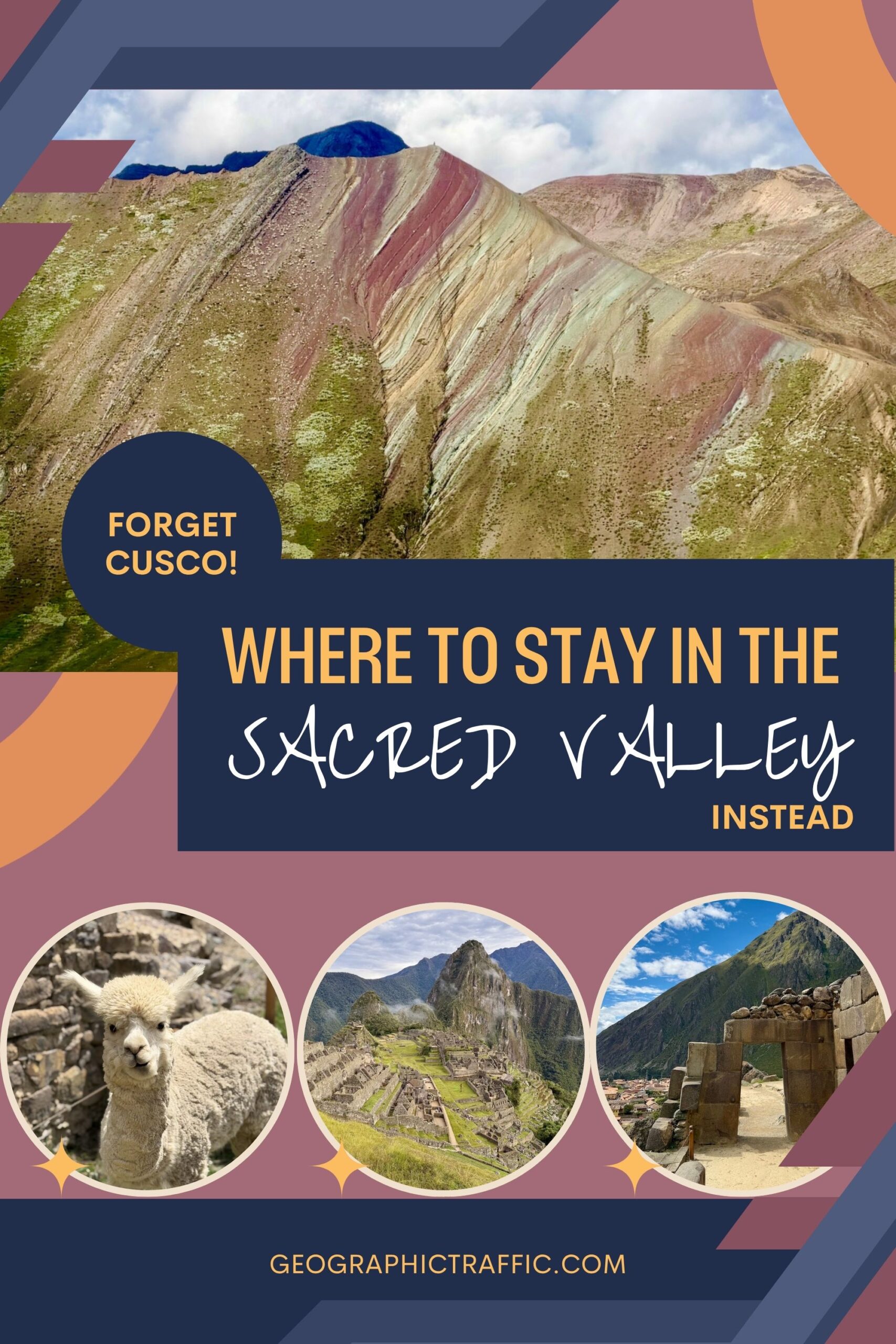
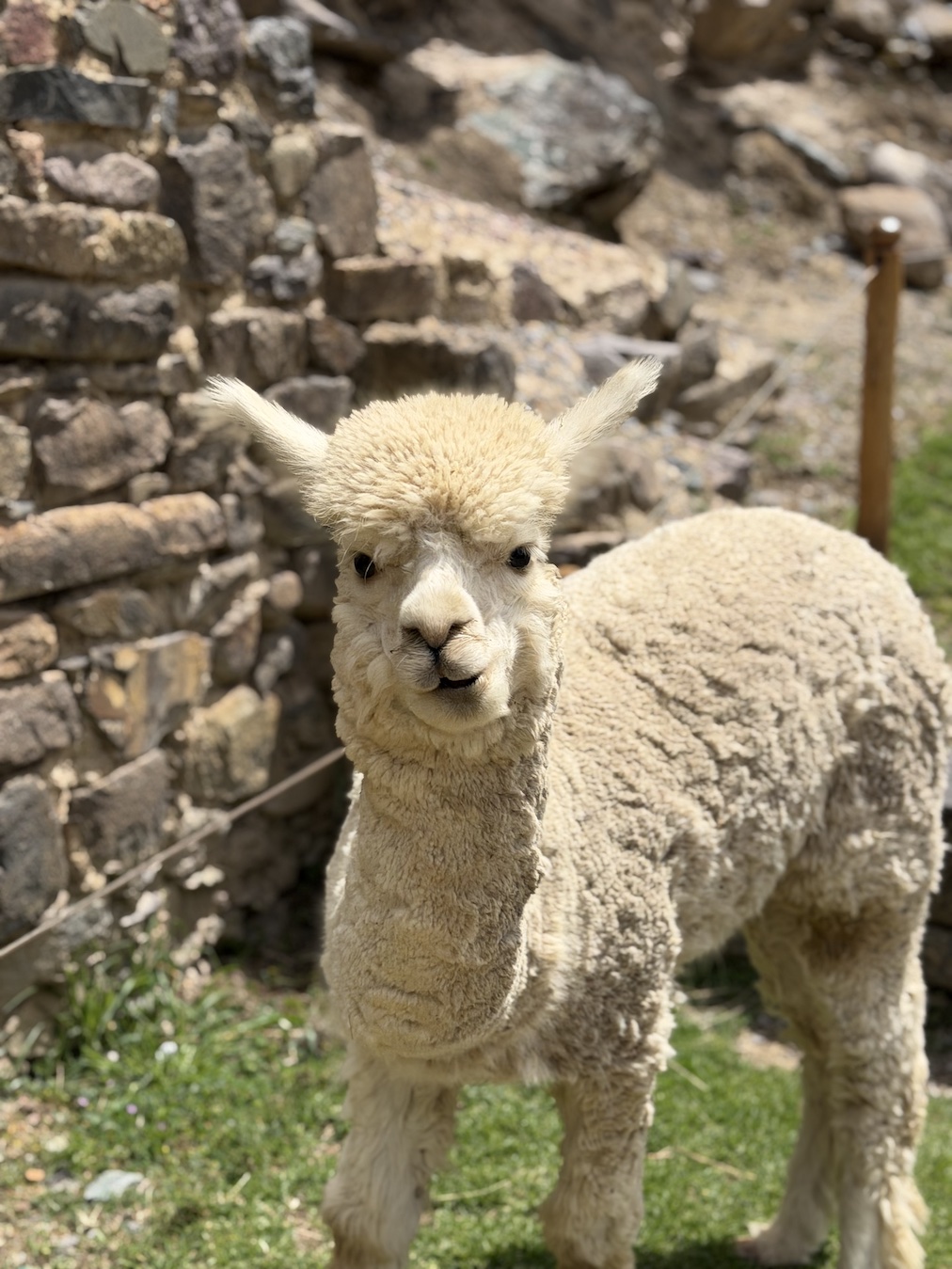
Peru is an incredible biodiversity hotspot due to it’s variety of ecosystems. There are costal deserts, fertile valleys, grasslands, rainforests, and colossal mountains. In fact, of the 32 climates in the world, Peru hosts 28 of them in one small geographical area. It has the largest flying bird in the world, the Andean Condor, and 90% of the entire worlds alpaca population lives there. Peru is home to the highest navigable lake in the world and some of the deepest canyons. The Amazon River begins in Peru and stretches across 9 countries before dumping into the Atlantic Ocean. The dramatic landscapes and abundant wildlife are complimented by a deep history of pre-colonial indigenous peoples and the legacy they left. With so much to offer, Peru is a travelers dream!
When planning our trip to Machu Picchu, I read a lot of conflicting information about where to stay. Most people recommended using Cusco as a base for exploring the Sacred Valley while acclimating to the elevation, followed by a visit to Machu Picchu. We decided to take a major detour against all those recommendations and I am here to tell you there is a better way!
The Sacred Valley stretches over 60 miles along the Urubamba River, roughly from Machu Picchu in the west to Pisac in the east, with several lovely villages and awe inspiring archeological sites tucked into remote corners along the way. If you are considering the Rainbow Mountains as part of your trip, then the geographical area stretches to almost twice that size! Getting around to each site requires covering long distances by car or train. Tours that offer a “Sacred Valley Day Tour” from Cusco are often a grueling day packed with hours of driving, being hustled around, and only stopping at the commercial tourist spots. Aside from this, Cusco is a sprawling and densely populated city. While there are lovely little pockets of the city, it can be extremely overwhelming overall. This combination does not offer an authentic experience in the Sacred Valley, and that is a shame.
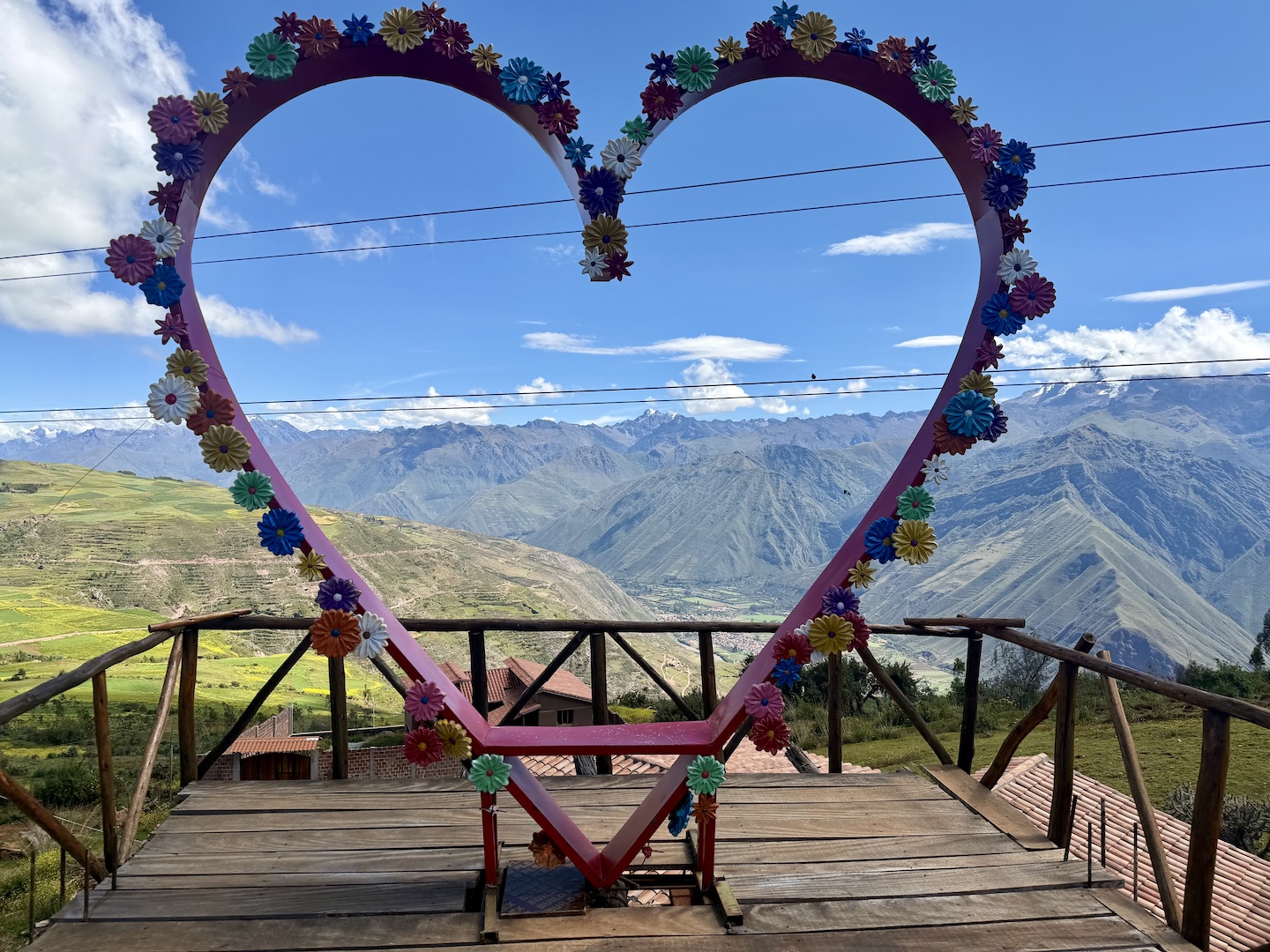
We recommend skipping Cusco upon arrival and instead staying the first few nights in Urubamba. It is a much smaller town than Cusco, but big enough to offer all of the services and comforts one would need. The best part is- the elevation is only about 9400 feet, which means it is not as hard to adapt to the elevation once you arrive. In addition, Urubamba is authentic and intimate, as most of the people you will encounter during your stay are locals. We recommend staying at Muju by Amak, a comfortable boutique hotel in the heart of Urubamba. Of course, you should plan to move around a bit to other accommodations during your visit to the Sacred Valley. It is convenient to stay at the base of Machu Picchu for one night, and it is also efficient to stay in Cusco at the end of your trip before heading home.
What to see in the Sacred Valley:
If Urubamba is your base, you can take some shorter day trips to the surrounding points of interest as you acclimate.
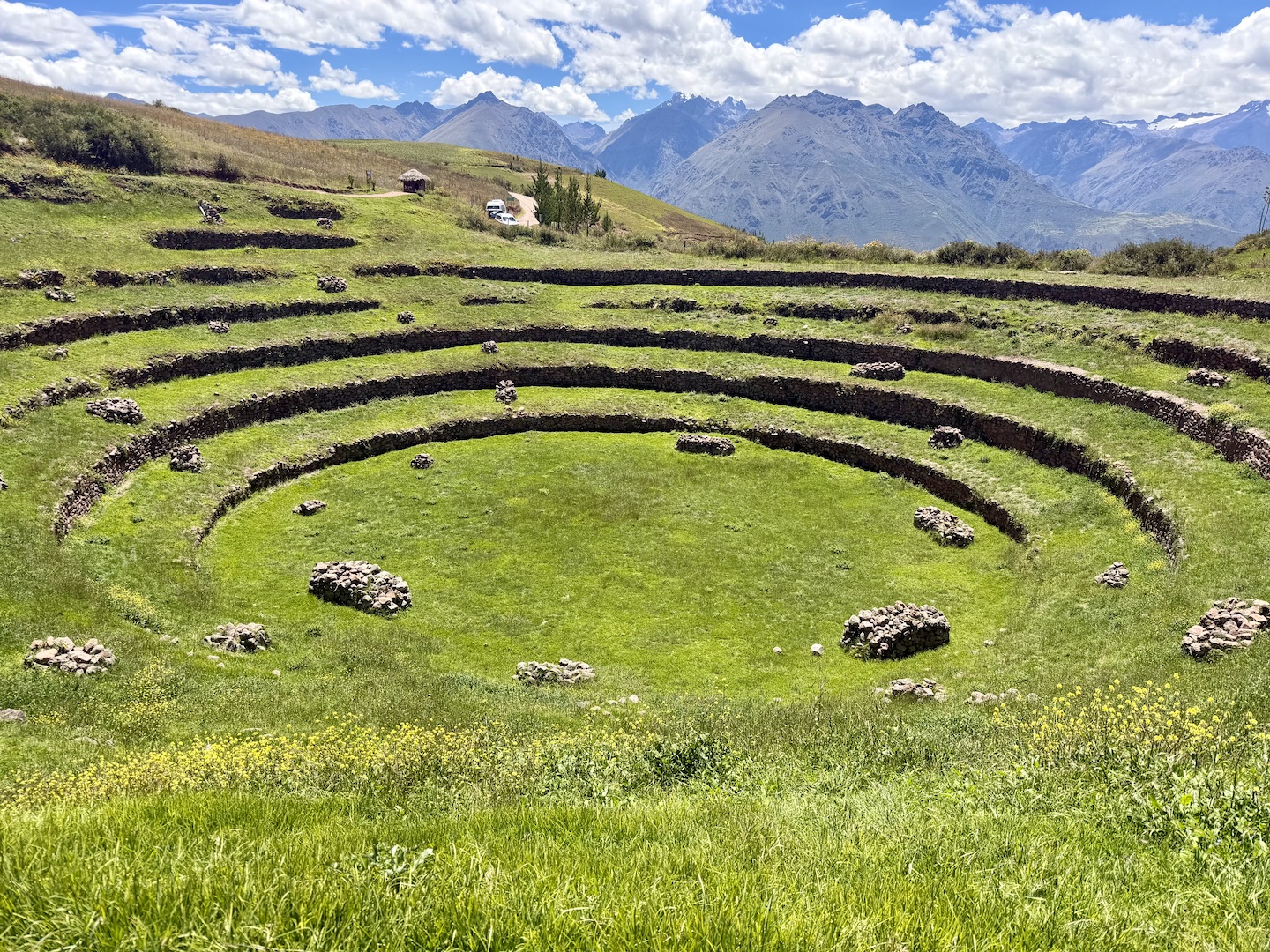
Moray:
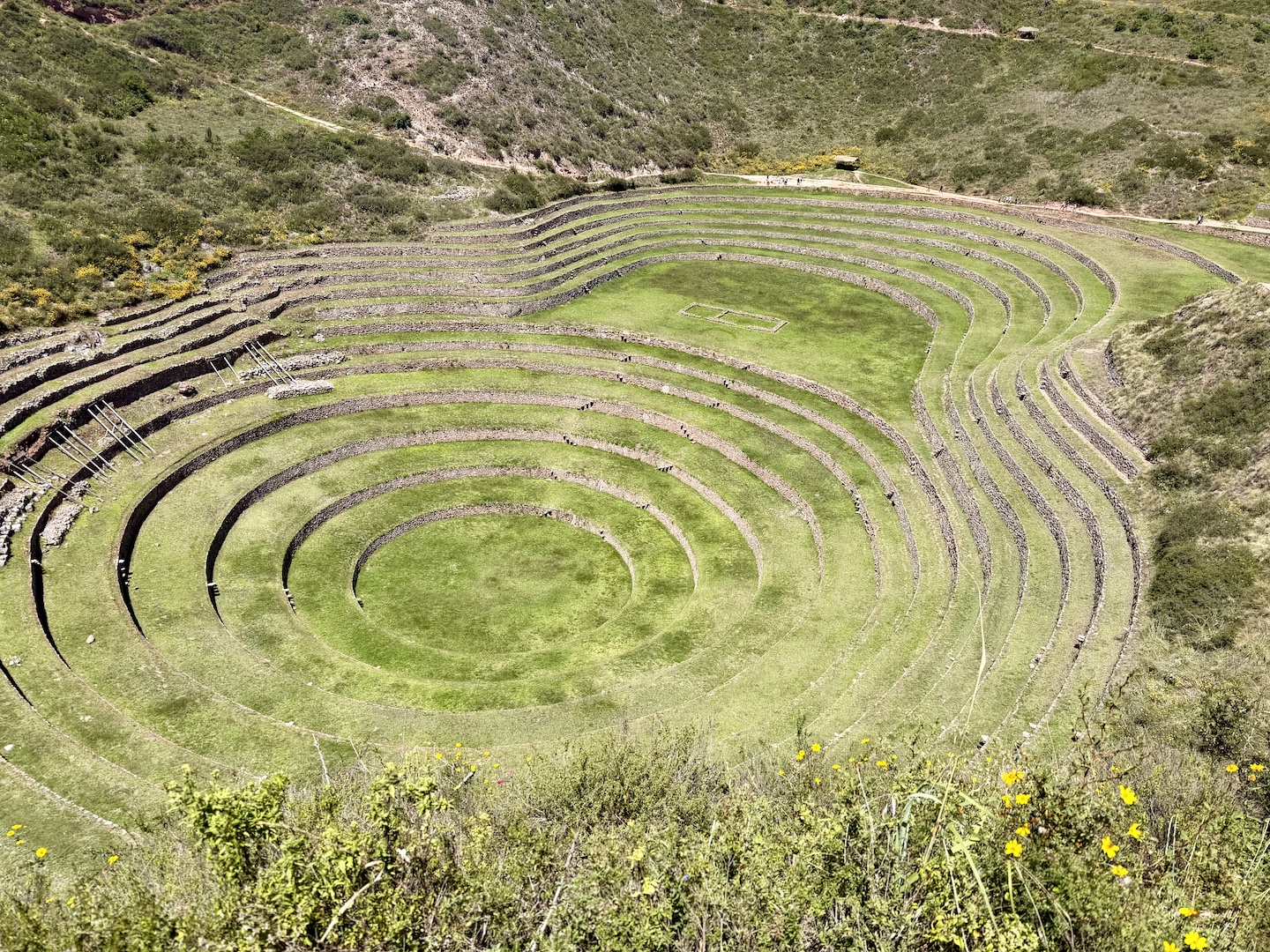
An Incan Archeological site that is identifiable by its unique terraced circles set into the ground. Their purpose is a mystery, but theories have been posed about the 600 meter wide inverted disks. One theory is that they were used as an experimental farm, using an irrigation system and microclimate for studying the effects of altitude, temperature and crop growth. Another theory is that the Inca used this space for celebrations and ceremonies, although it is fairly remote from Cusco to make sense. It could also have been an open pit mine that was repurposed as a farming site later on. And finally, yes here it is, an alien landing site that left a perfect depression in the earth. In any case, Moray is an excellent stop on a day out exploring the area, and after your hike around the site you can also take an ATV, mountain bike, or horseback riding tour if time permits.
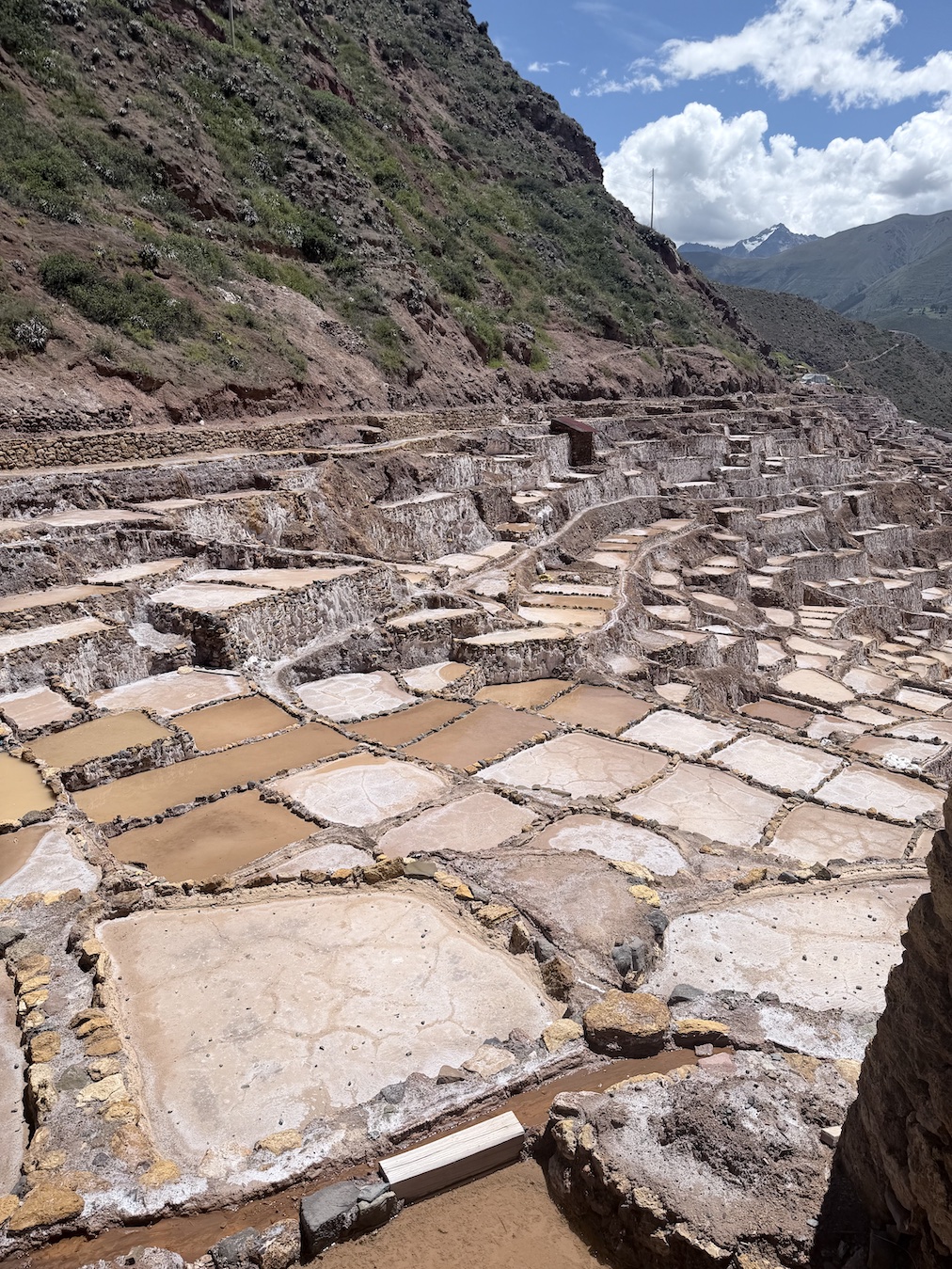
Maras Salt Pans:
The salt mines consist of over 3000 salty ponds constantly being filled by an underground aqueduct. The ponds turn from tan to white depending on the concentration of salt in the water, and once ready, the salt is harvested in a traditional way. It is said that Maras salt is the best in the world, with the least amount of heavy metals in it. Salt ponds are each tended by local families that have passed down their pond for generations. There is a small fee to enter and walk around the area and does not require a guide.
Chinchero:
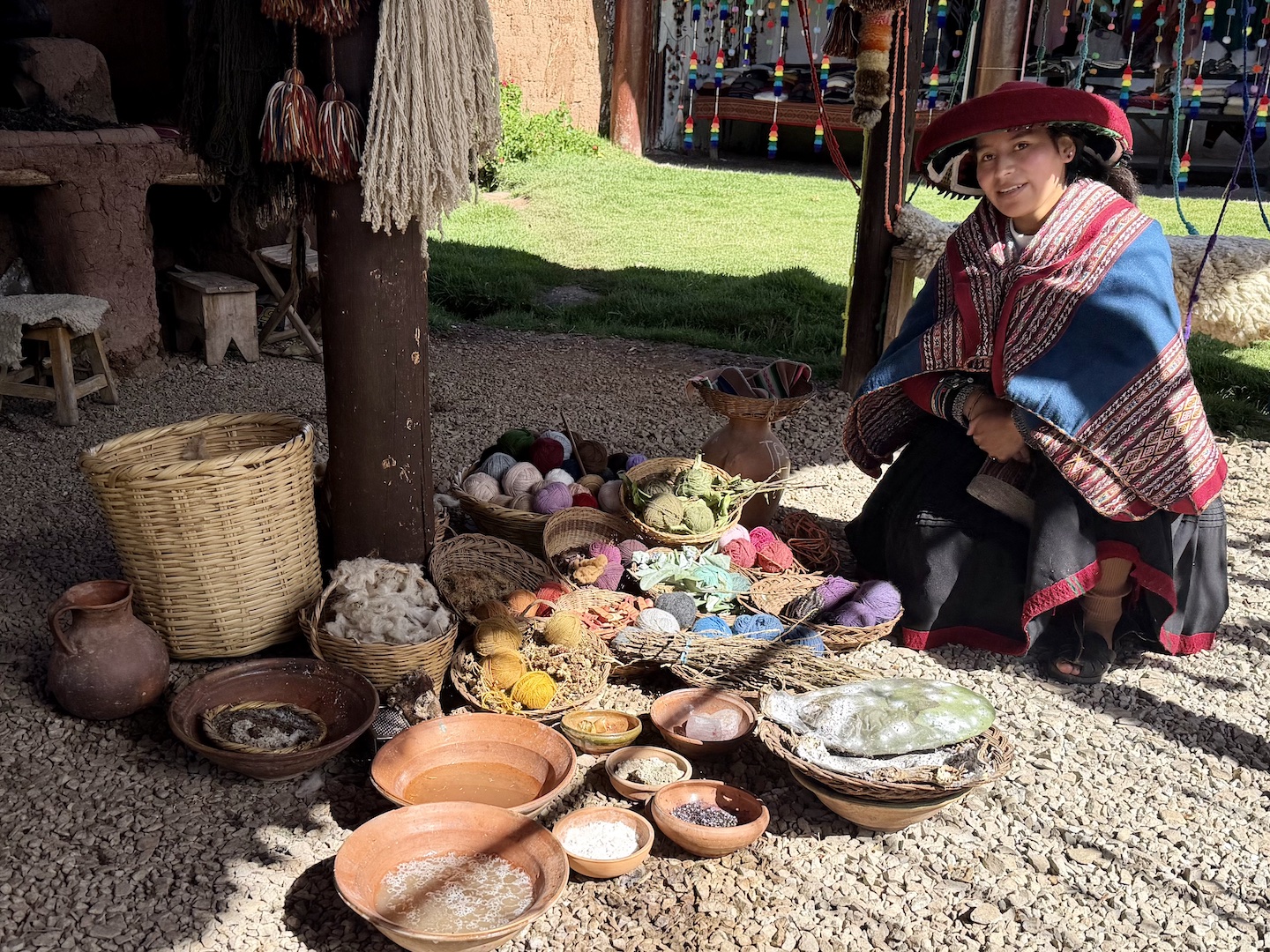
The textile capital of the Sacred Valley, this is where you can enjoy a free demonstration of the production of alpaca or sheep wool products. Chinchero is a great place to purchase authentic textiles that have been harvested, dyed and made right in the village by local families. Fun fact: it can take over 600 hours to make a Peruvian poncho from scratch! In addition, there are several great archeological sites in Chinchero that are lesser known but still awe-inspiring. As an aside, Chincero should be getting an international airport in 2027 and this will be a much more convenient airport to fly into from Lima!
Ollantaytambo:
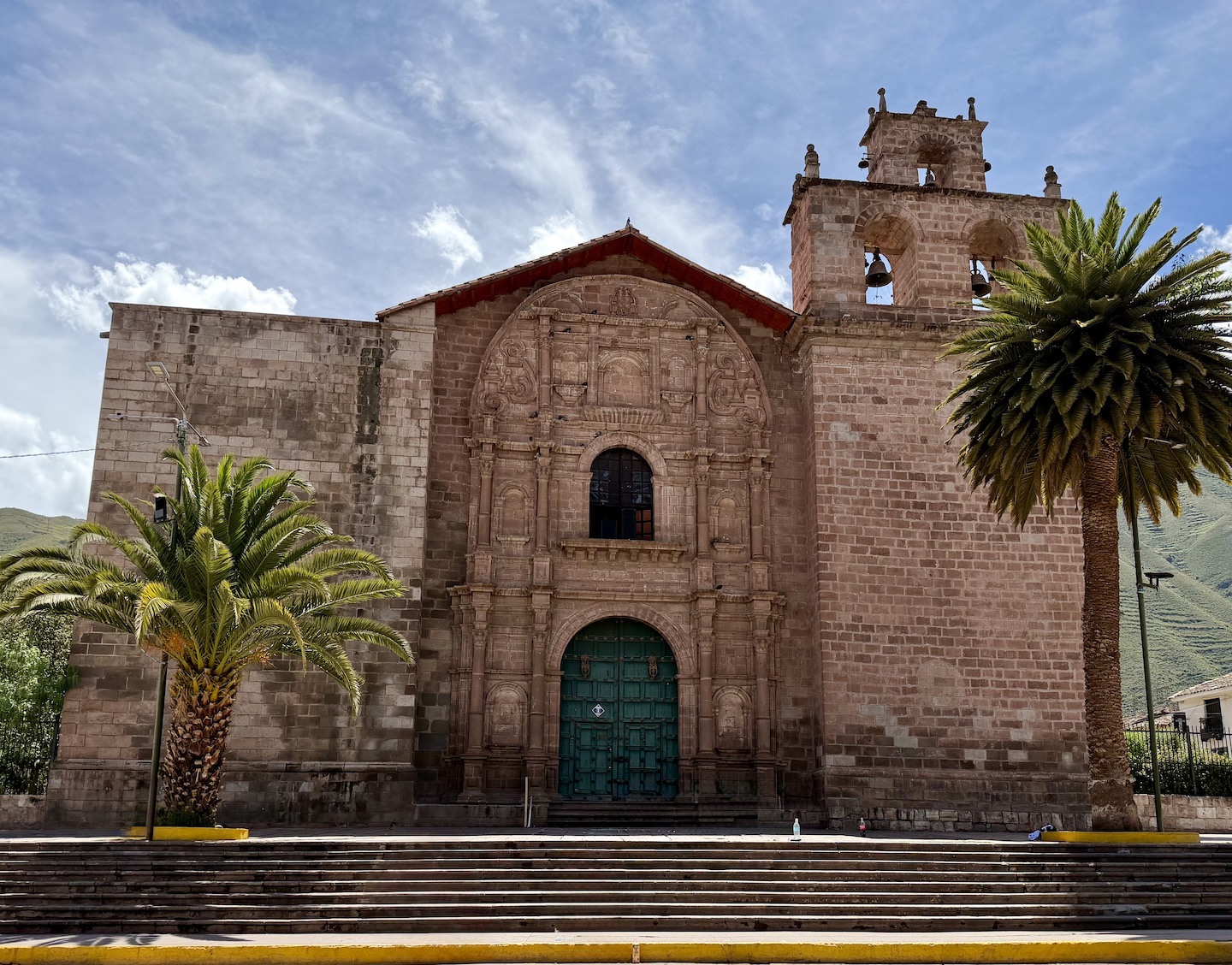
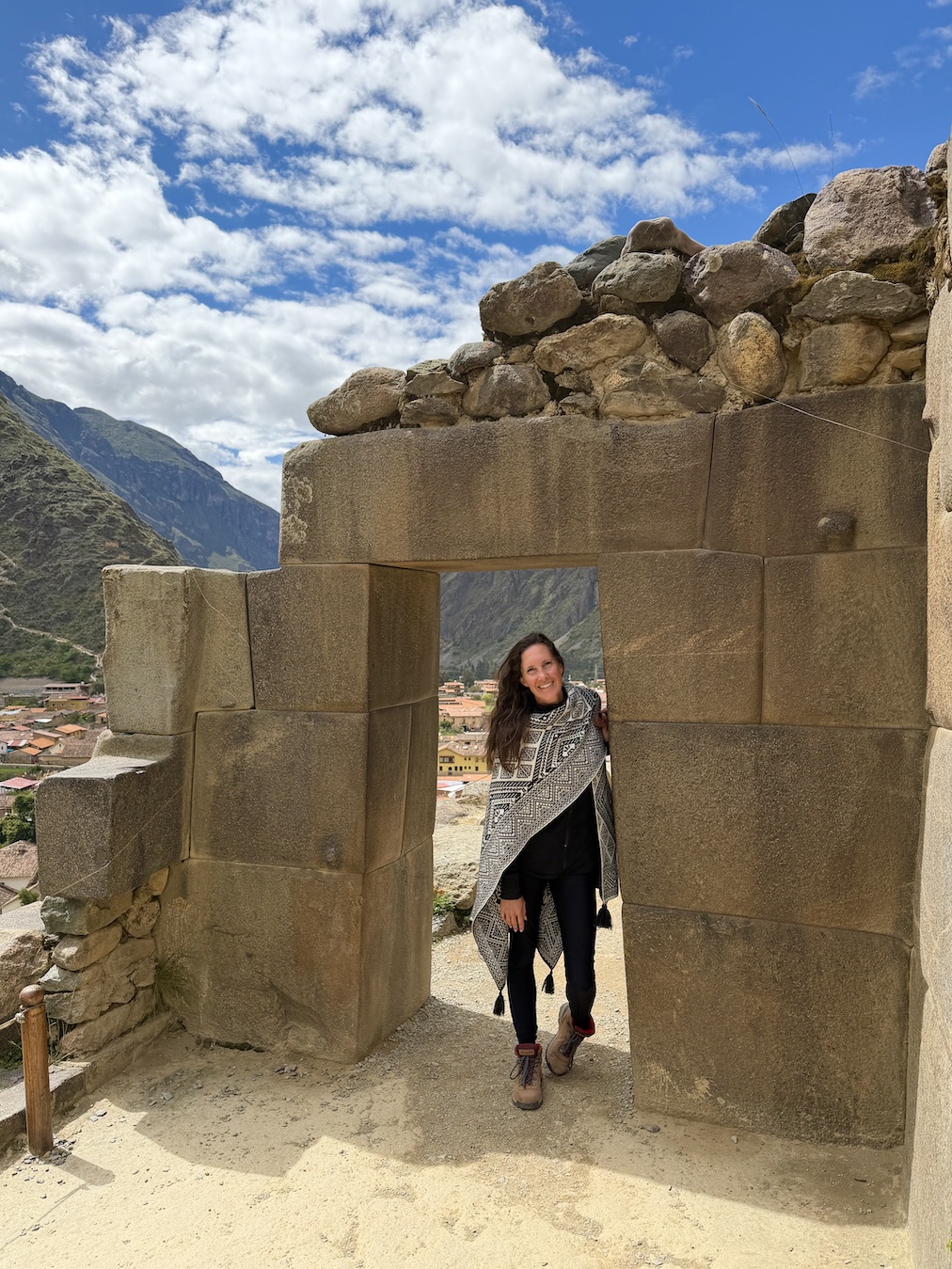
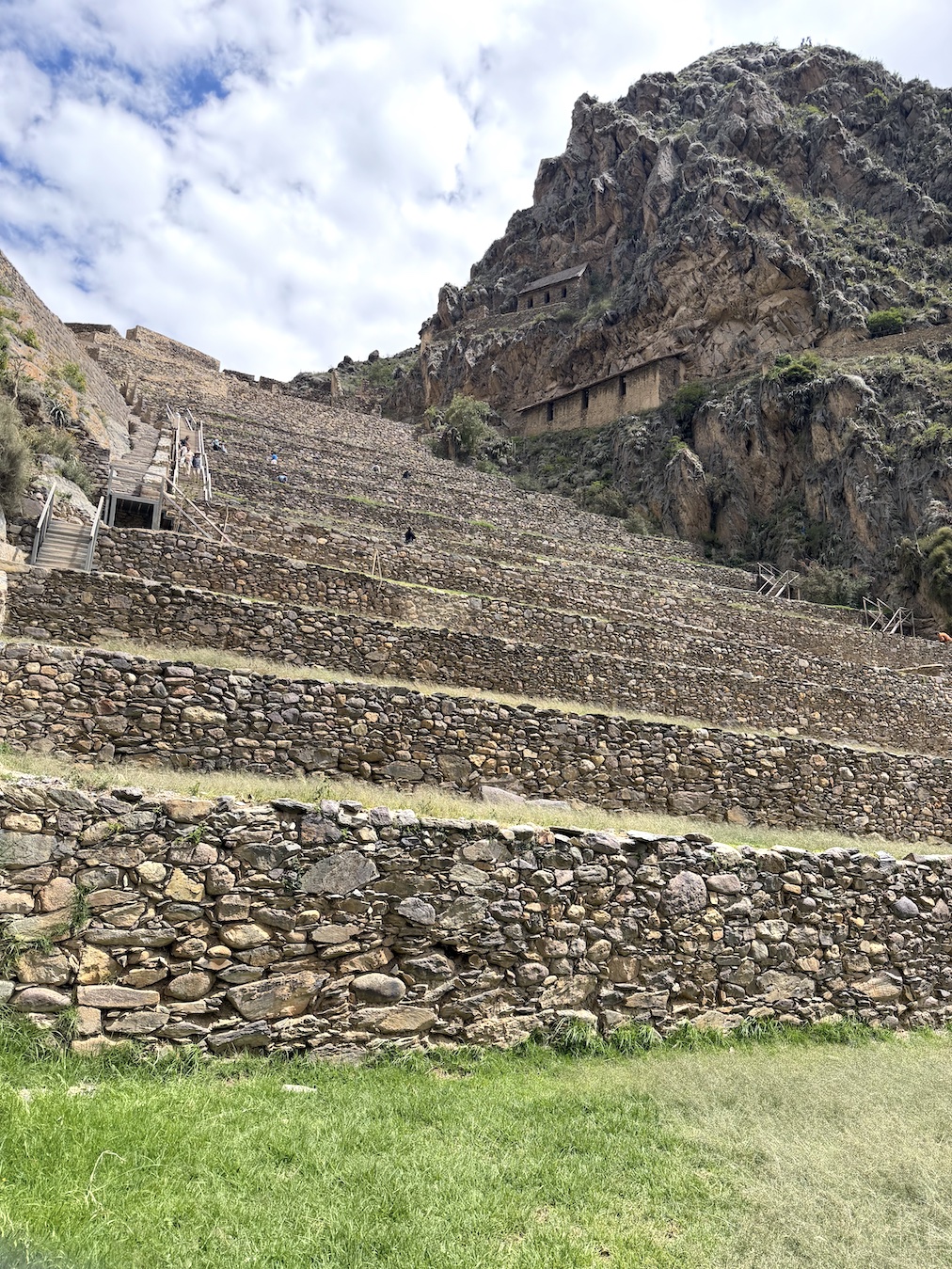
The town is a gateway to Machu Picchu and hosts an important and prominent archeological site as well. Its a really cute town, with most of the central buildings sitting right on top of the Inca foundation stones. The archeological site features a fortress with watch towers, working aqueduct, a cemetery, and a 17 tiers of agricultural platforms. Used as a military post for the Inca and then the Spanish, this is a great place to learn about how life in the valley changed in post-colonial times.
Pisac:
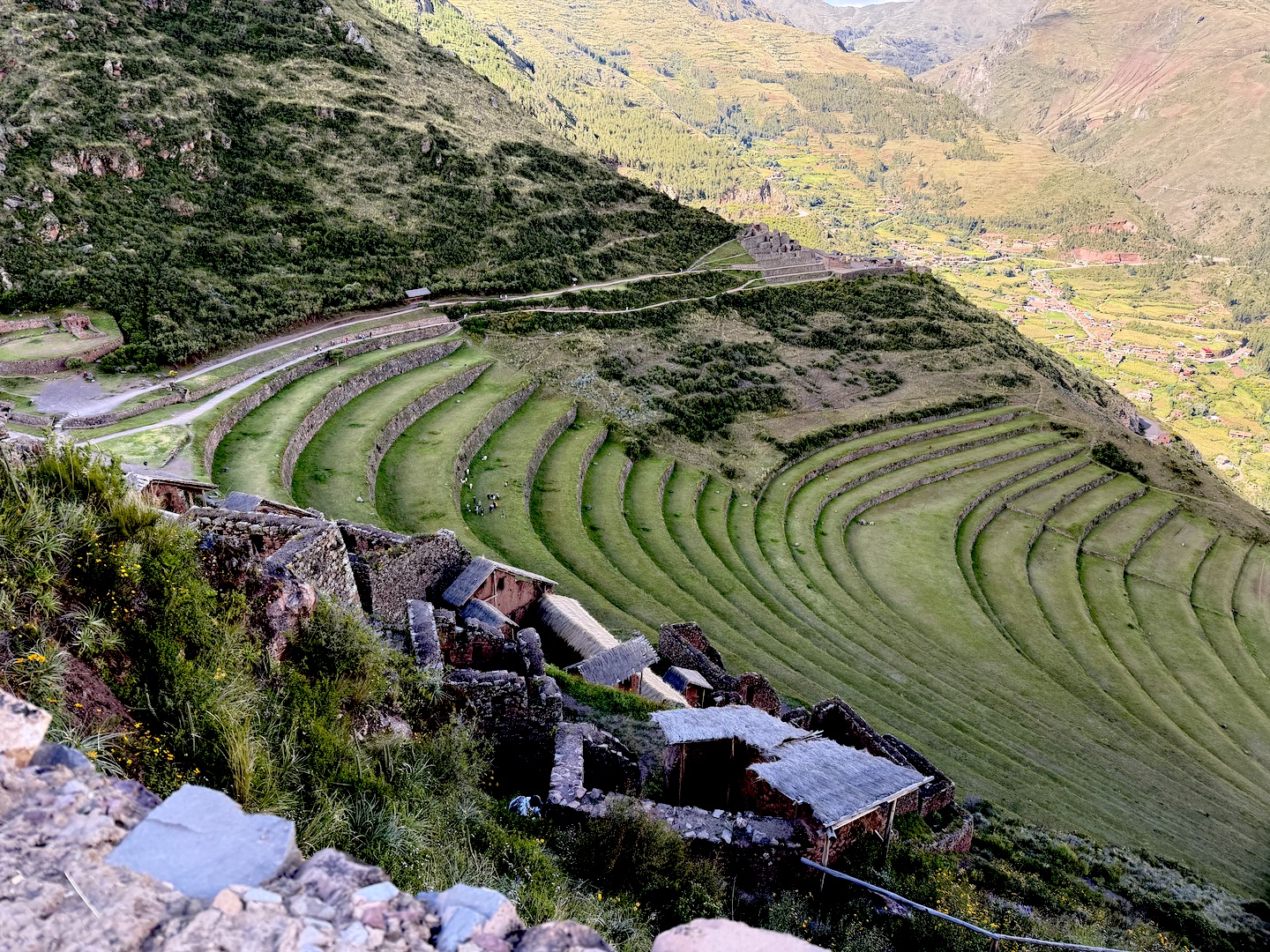
An archeological site and town known as one of the most traditional villages in the Sacred Valley. The market in Pisac is one of the main attractions on any Sacred Valley tour, and it is massive and magnificent. However, it is a very touristy area so I don’t think I would call it an “authentic” town in the Sacred Valley. It is absolutely worth the visit, if not for the market then definitely for the archeological site. Sometimes called the “little brother of Machu Picchu,” the well preserved ruins showcase massive agricultural terraces and stone buildings you can explore up close. Temples, watchtowers, cemeteries and military barracks make up some of the ruins you can still see today. Some of the construction served a ceremonial purpose, while others were used for agricultural or astrological reasons. Perhaps the most interesting component of the ruins is the hydraulic water fountains and aqueducts that are still functioning, highlighting the Inca connection with water and the sophisticated technology they possessed. Do not miss the chance to marvel at the engineering and geometric patterns found on site, and take time to sit and admire the alpacas wandering the grounds.
Rainbow Mountain:
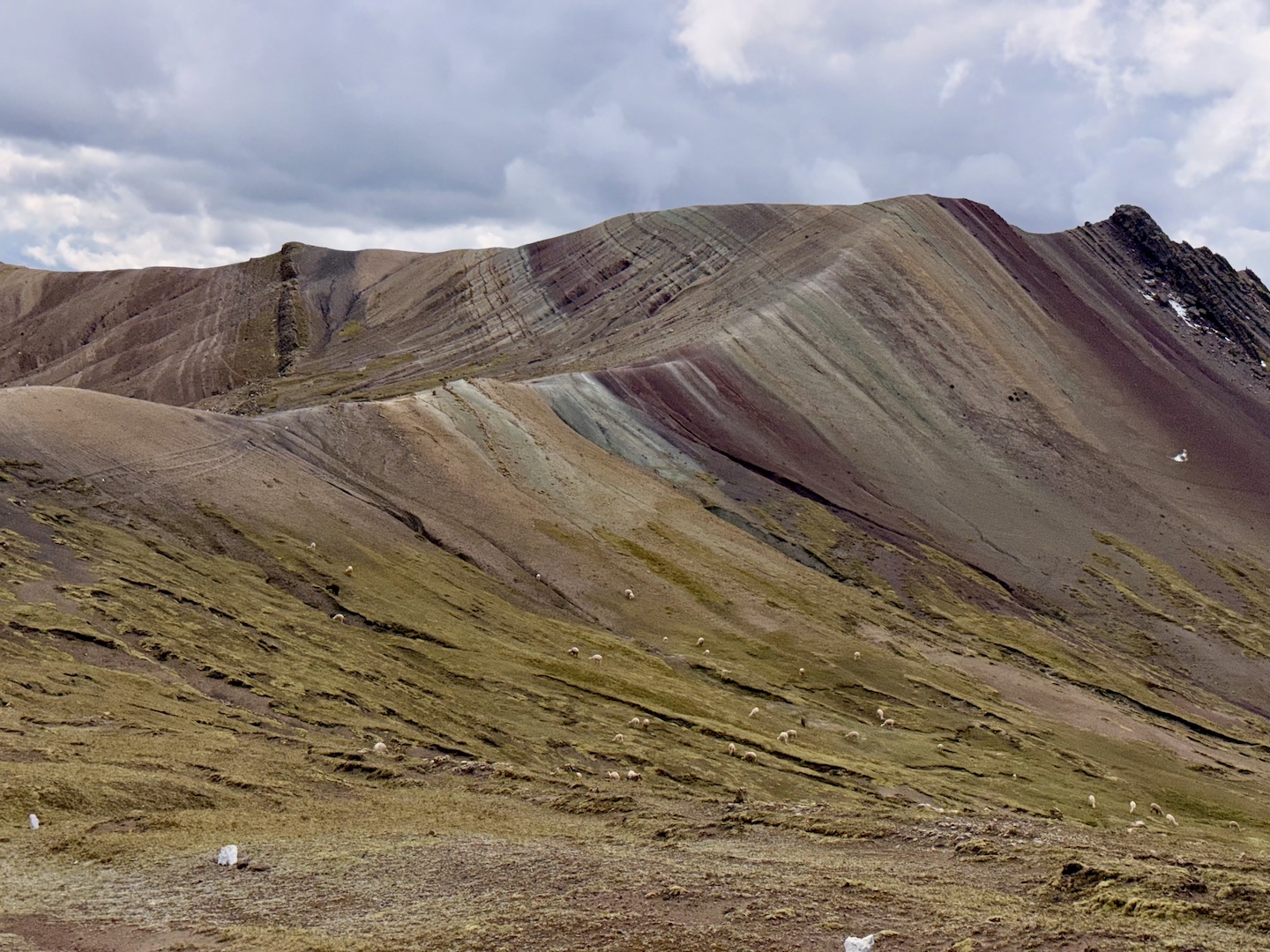
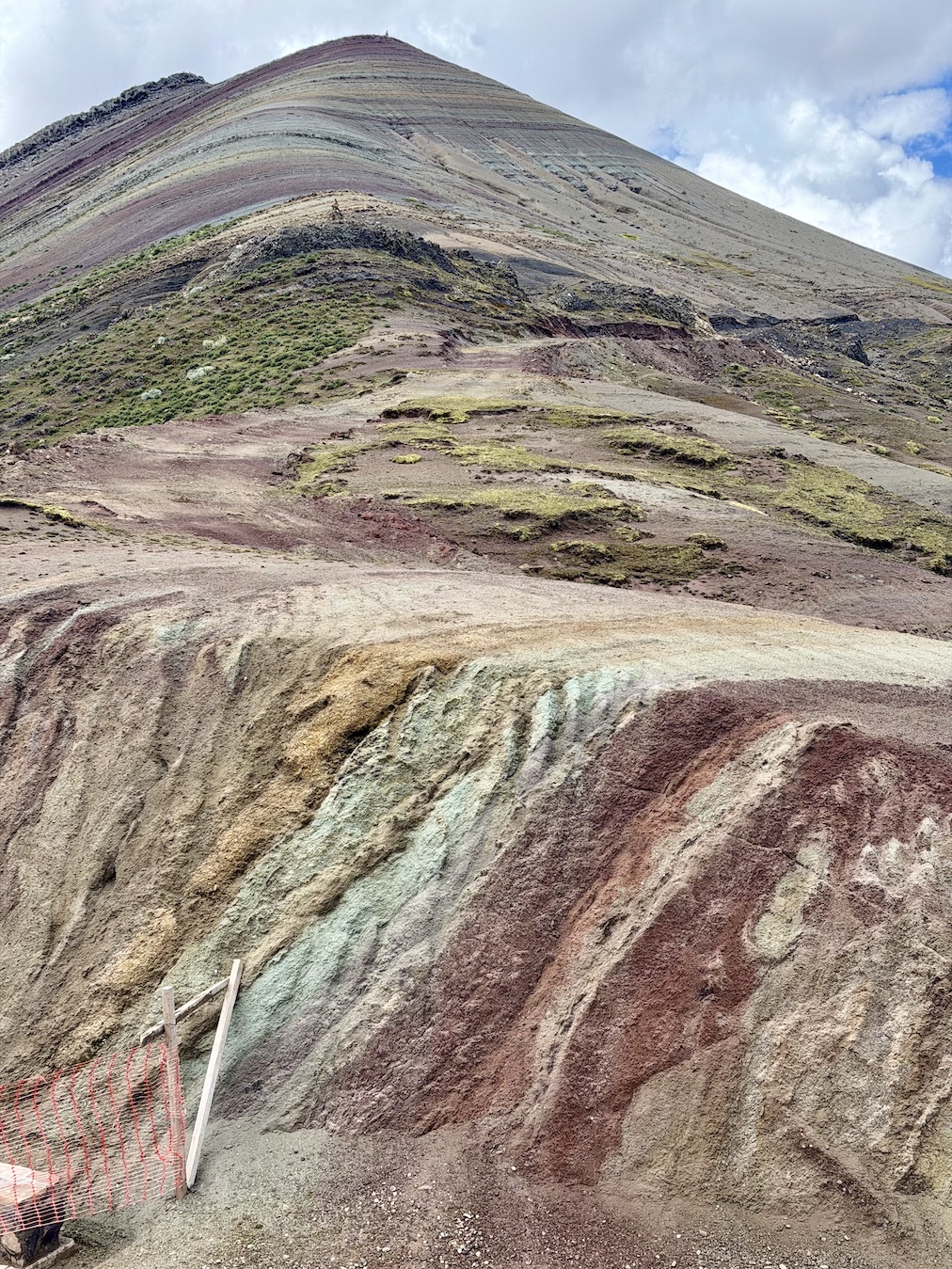
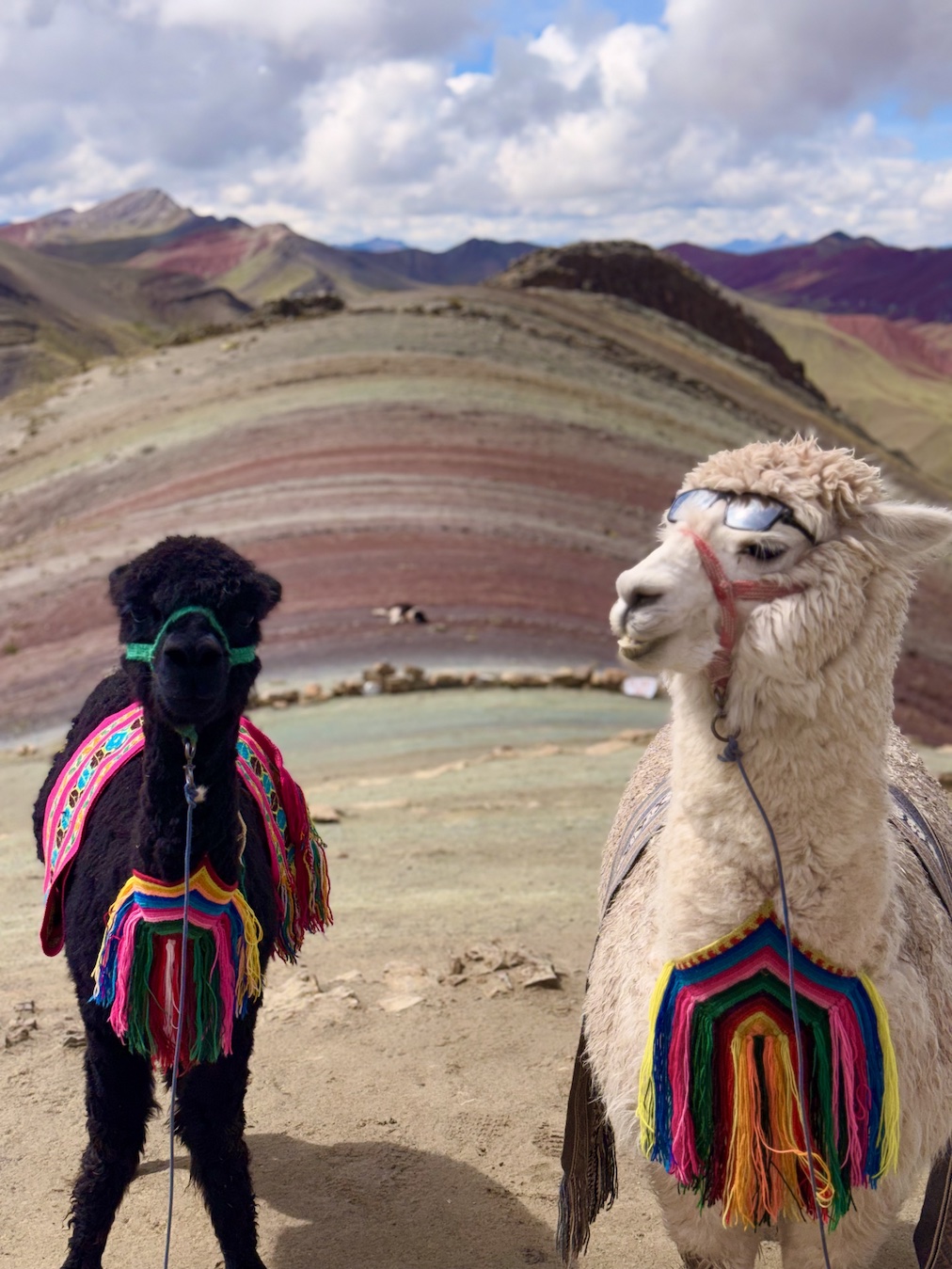
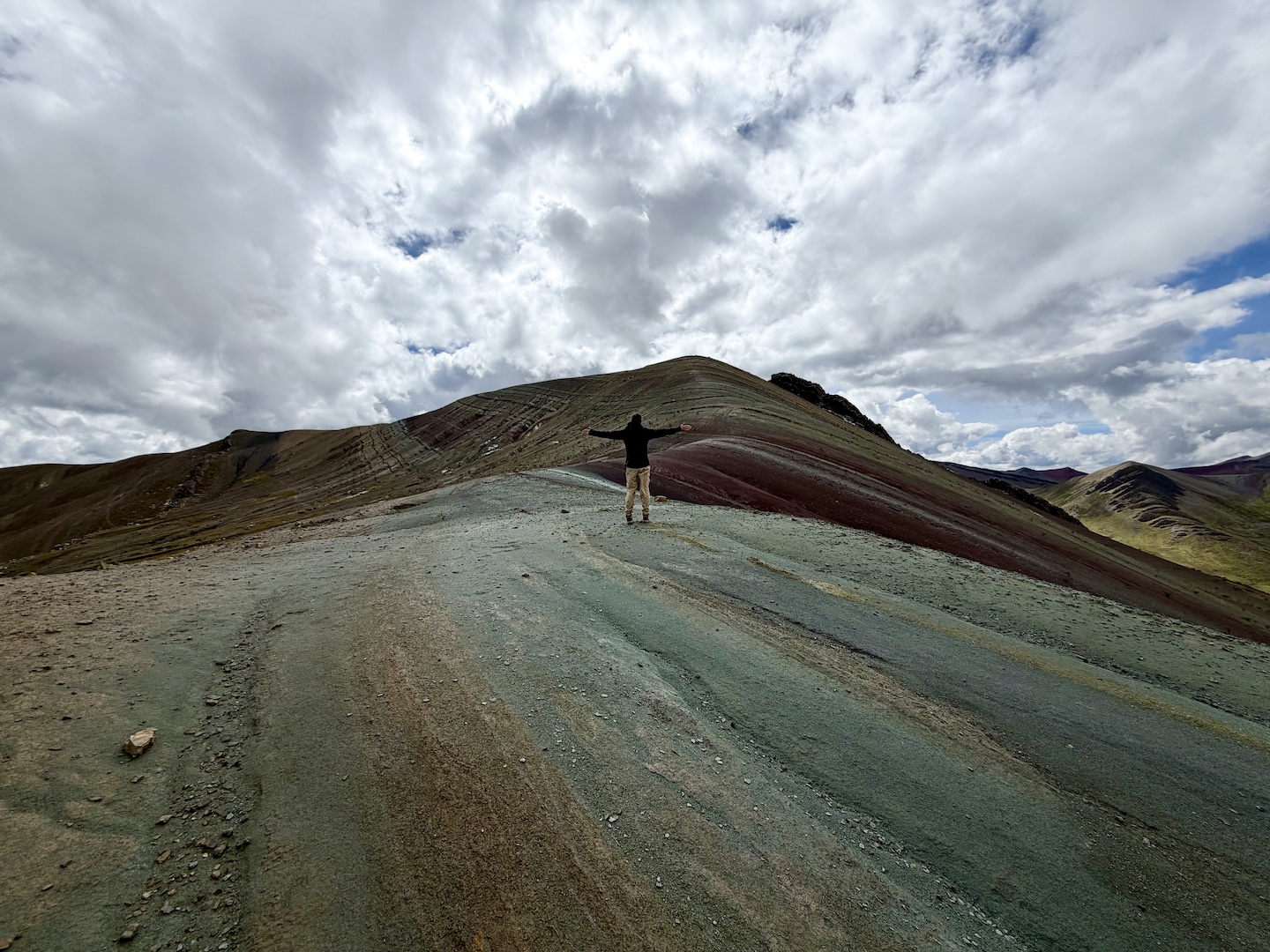
There are two famous Rainbow Mountains in the Sacred Valley- Rainbow Mountain Cusco and Palccoyo Rainbow Mountain. We only went to Palccoyo, although I hear they are both stunning. These mountains were formed by millions of years of layers of sedimentary minerals that were uplifted by tectonic plate movement. After erosion and glacial melt, the beautiful colors were exposed in a rainbow pattern. Quartz sandstone, red Cenozoic clay, Limonite and Phyllite make up some of the mineral deposits found in the area. Be advised that the drive up to the trailhead is long, curvy and bumpy but well worth it because you travel through very old villages and see how the locals really live. We really enjoyed Palccoyo because it was super empty of other tourists and there were several peaks to observe from different angles. Some say the hike is “easy” -and it can be, if you are just going to the lookout point. If you want to get up close and personal with the colors on the mountain, or hike to the incredible rock forest, then I would classify the hike as “challenging”. The summit sits at 16,250 feet above sea level, so plan to take lots of breaks, chew on your coca leaves, and drink plenty of water. It can also be really cold at such altitudes, so layer up well. We spent about three hours hiking and enjoying every moment here.
Machu Picchu:
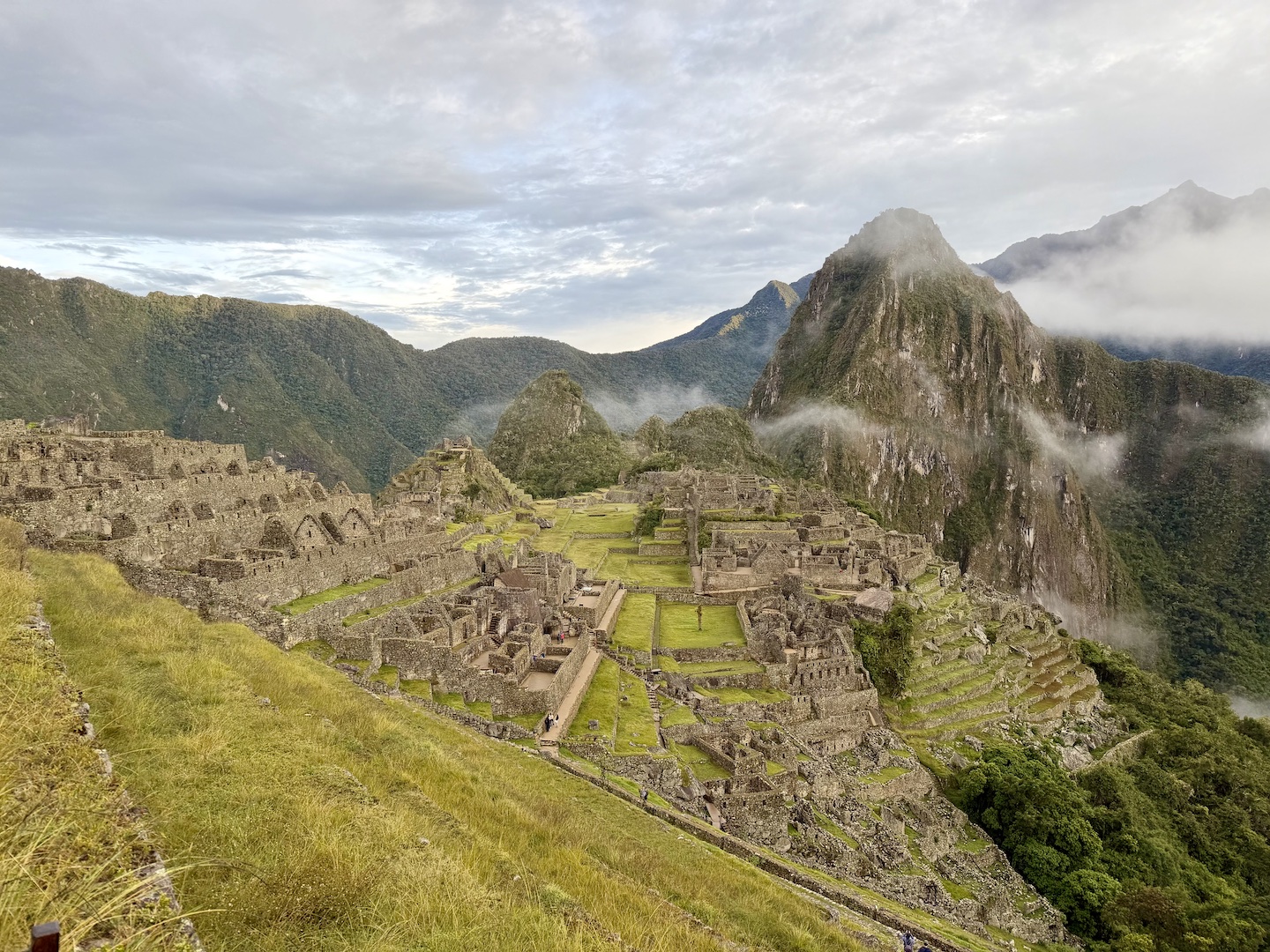
Machu Picchu is one of the most significant and best-preserved pre-Columbian ruins in the world. It sits at an elevation of 7,710 feet and is and one of the 7 new wonders of the world. The Incas were one of the most powerful indigenous civilizations in America, although the culture only lasted about 100 years. Set in a unique geographical location, Machu Picchu outshines everything else in the valley. In this period of Inca history, the Sun was the most revered deity, the source of life and the father of the Sapa Inca. Therefore the June and December solstice were celebrated wildly here, which marked the beginning of the planting season or the dry season. Sacred ceremonial sites are found nestled throughout the grounds at Machu Picchu, facing different directions for the sunrise and the astrological constellations. Great technological mastery of masonry and aqueducts are found on site, along with the impressive tired agricultural grounds. It is believed that 400-600 people lived full time at Machu Picchu, keeping the site running smoothly and improving upon it until the Sapa Inca would visit again. Dwellings are found on the lower levels of the grounds, with countless artifacts such as grinding stones, pestles, ornate clay pottery, intricate jewelry, bronze tools, knives and Illas.
Cusco:
Cusco is the oldest continuously inhabited city in South America. Because of this, many layers of historical time periods can be seen throughout, which makes it super interesting. It is situated in the heart of the valley surrounded by dramatic Andean mountains. The population is around half a million people, with vibrant markets, bustling commercial industries, and diverse neighborhoods.
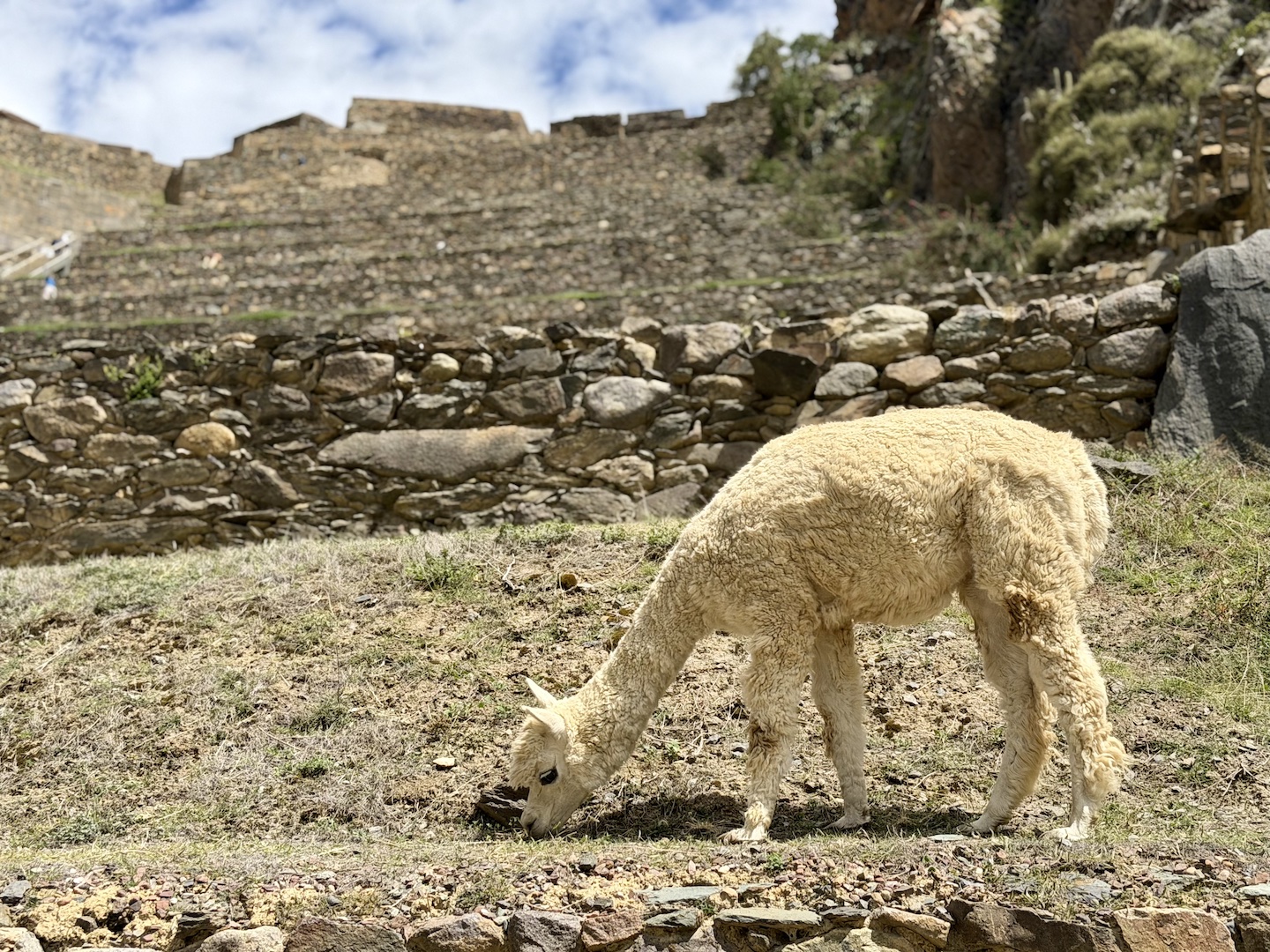
Getting around:
We recommend using a tourist service such as Flavios Tours Machupicchu. His rates are reasonable and he will take you anywhere you want to go! If you can get a reputable tour guide then you can arrange all of your transport via WhatsApp, tailoring your trip to what is most convenient for you. You can also take a taxi from a taxi stand per trip, but be sure to negotiate a price before you get in the car. Busses are also plentiful but can be harder to navigate. Renting your own car is possible but we think it is well worth the extra cost to hire a guide that will stay with you throughout your day.
Suggested 7 Day Itinerary for the Sacred Valley:
Day 1: Arrive in Cusco. Have the hotel arrange transport for you and your group straight to Muju in Urubamba. After you check in and get settled at the hotel, wander down to the Plaza for lunch or dinner at Pakakuna Restaurante, and maybe a little walk through the market to get your bearings. This should be enough of a strain for your first day and you will want to relax and get a good sleep tonight.
Day 2: After a hearty breakfast at the hotel, take an arranged day trip to the surrounding points of interest, including Chinchero, Moray, and the Maras Salt Pans. If you won’t have time the next day, add Ollantaytambo to the end of the day here. Have dinner at Organika La Huerta on your way back into town, and stay at Muju once again.
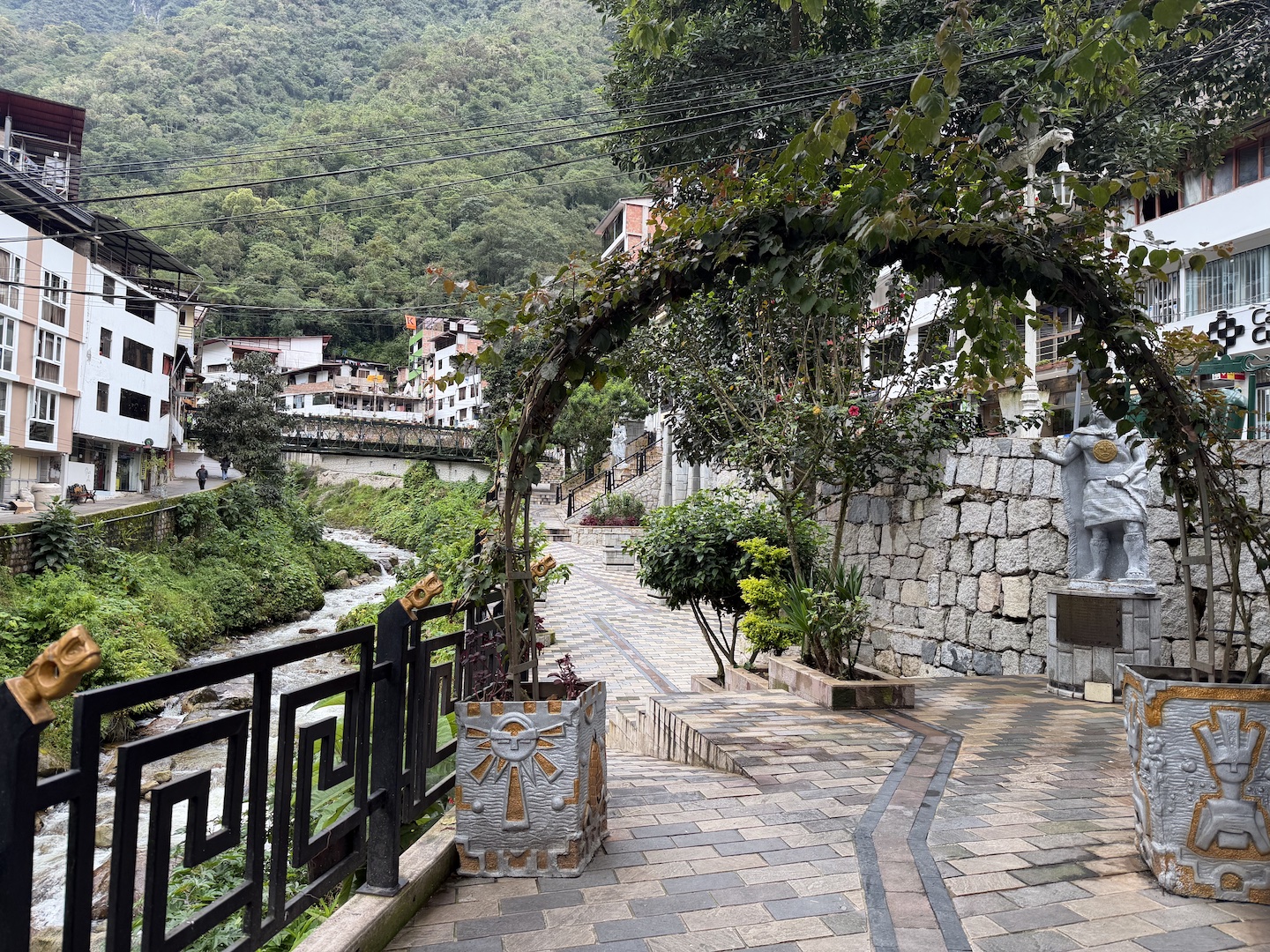
Day 3: Check out of Muju and make your way to the Ollantaytambo ruins before proceeding to Macchu Picchu- either on the train to Aguas Calientes or via the Inca Trail. (If you are taking the Inca Trail, pick up this itinerary after your hiking adventure is complete.) If you are taking the train, purchase your train tickets well in advance and try to sit on the left side of the train on the way up. If you have an afternoon free upon arrival in Aguas Calientes, you can visit the hot springs and then have a nice dinner overlooking the river. Stay in Aguas Calientes overnight to prepare for your early morning tomorrow.
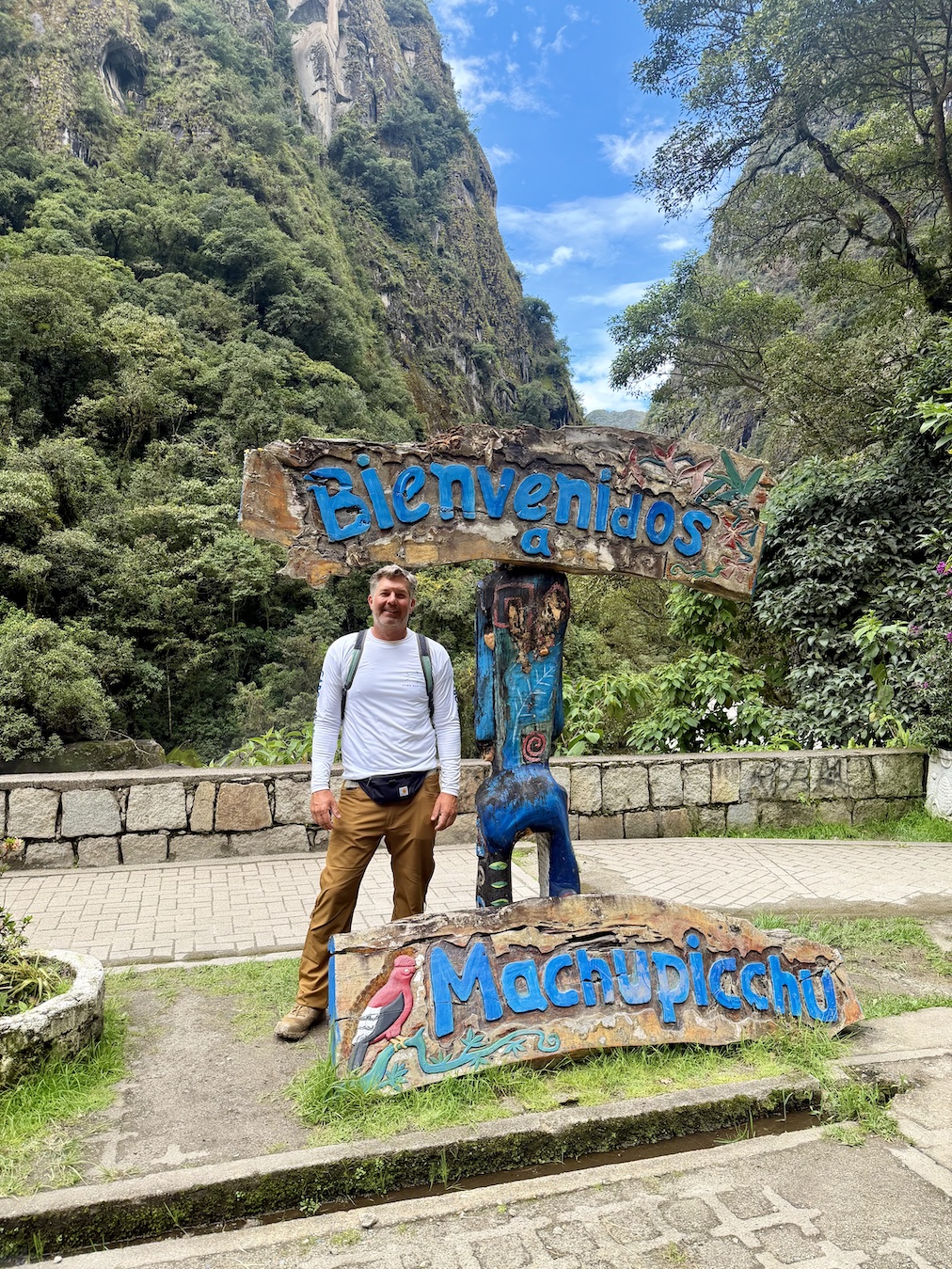
Day 4: Visit Machu Picchu. Wake up before the sun and get to the iconic viewpoint early in the morning! Make sure you have purchased your tickets well in advance. A guided tour is highly recommended. We go into more detail about how to visit Machu Picchu in our guide. Take your time to tour the grounds and get all the photos and feel the accomplishment of getting here! Afterwards, take a moment to visit the museum and have lunch before taking a late afternoon train back to Ollantaytambo. Pre-arrange transport to bring you to Pachamama Hampina Wasi.
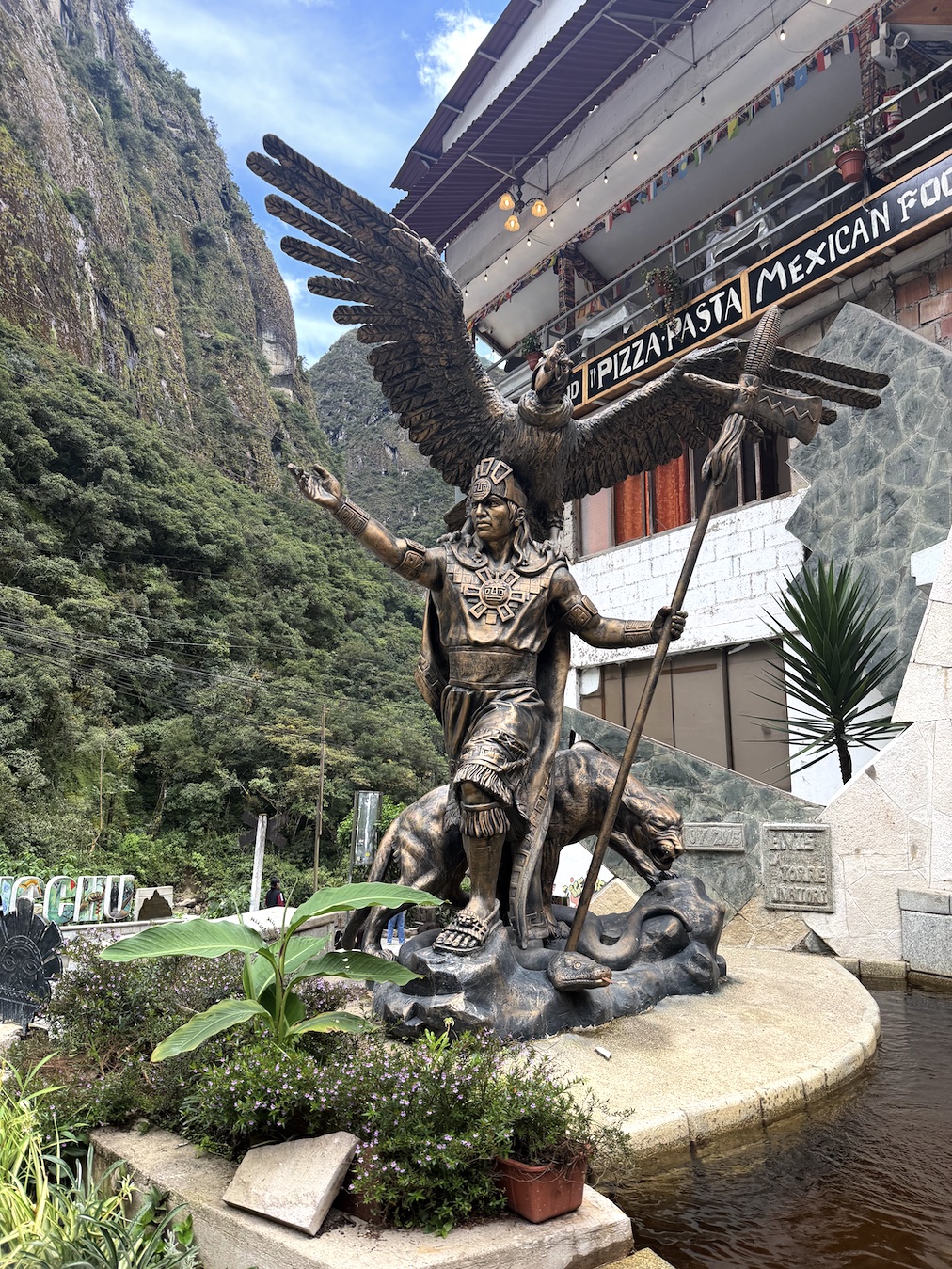
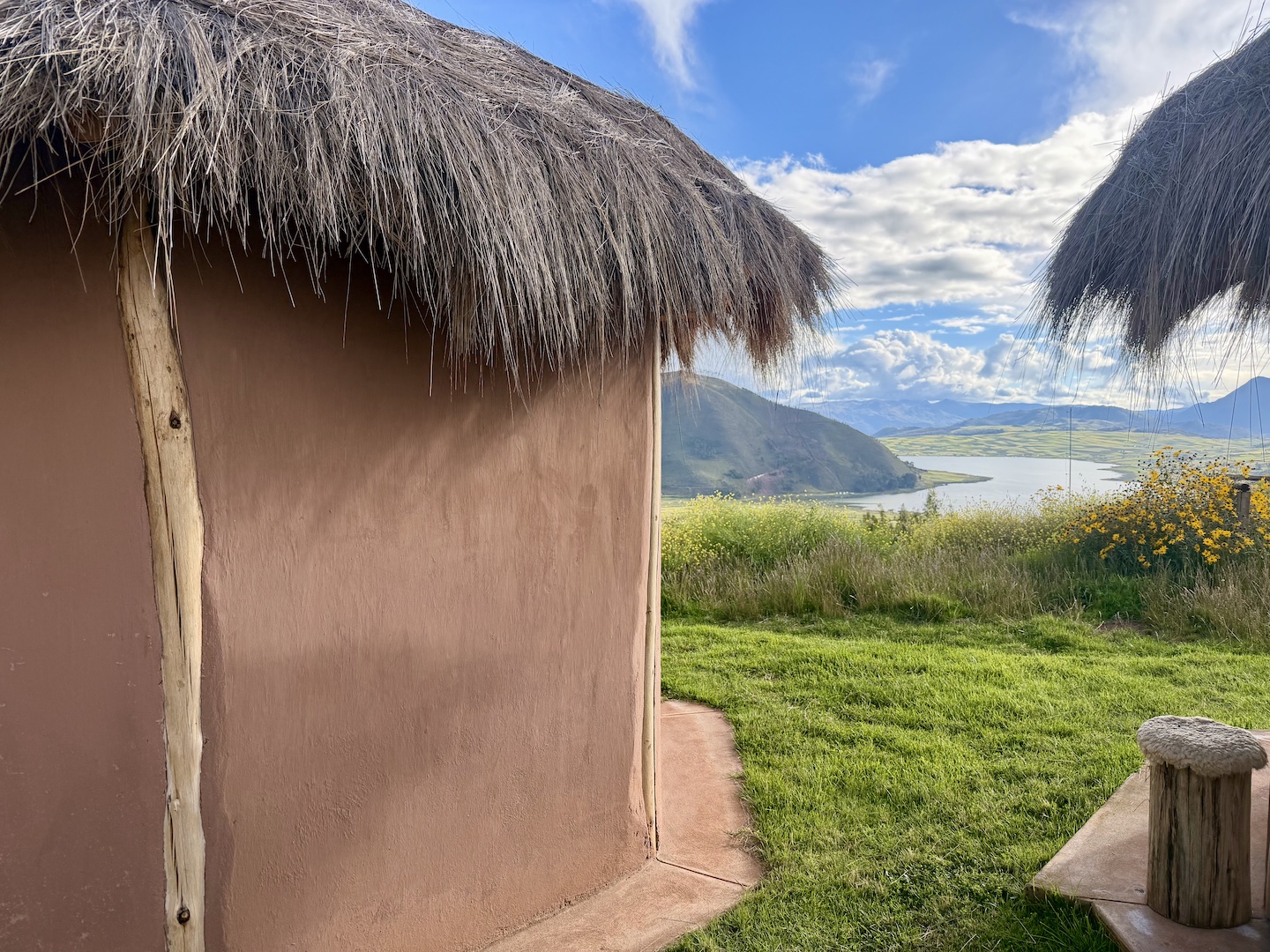
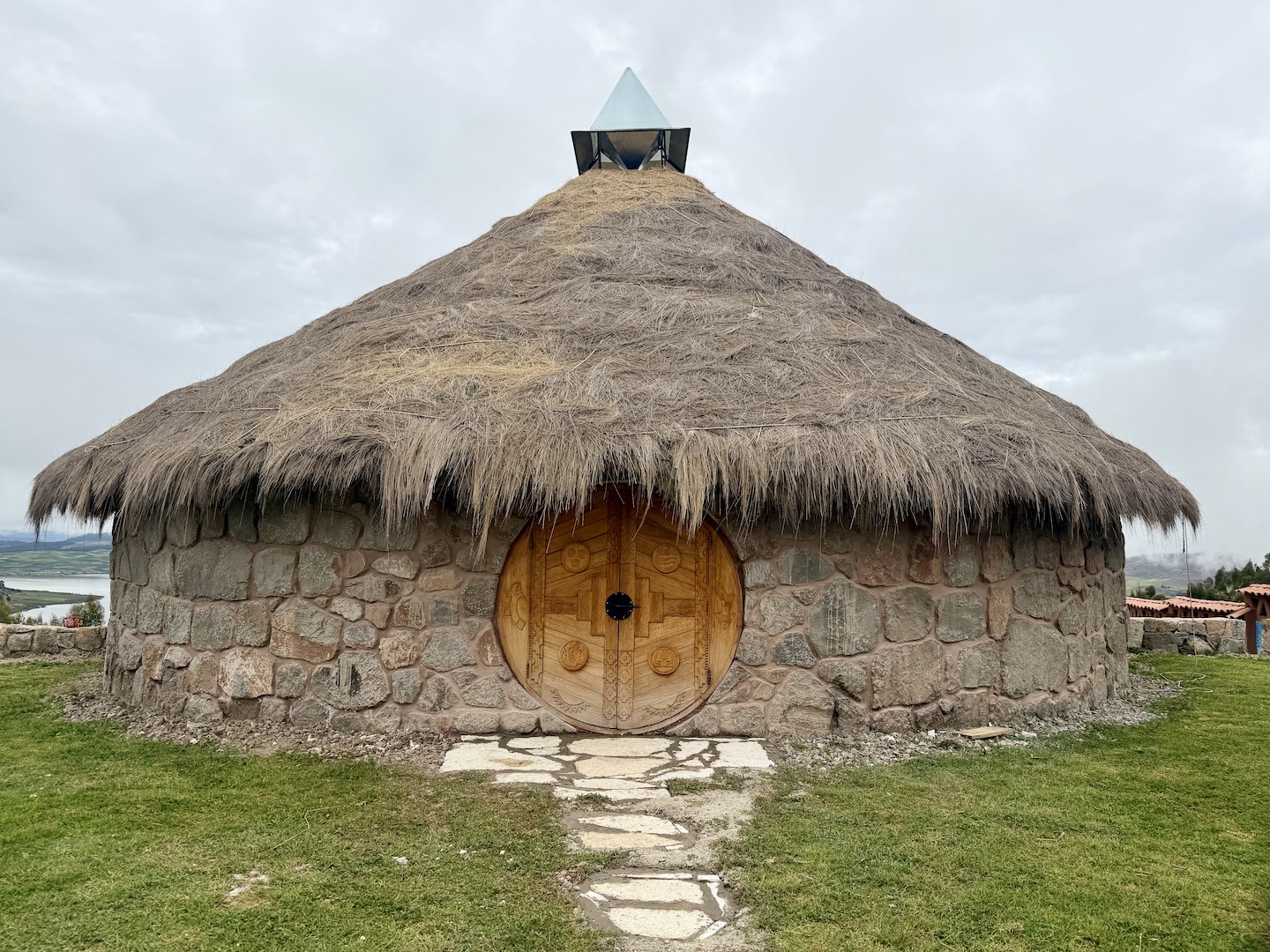
Day 5: Pachamama Hampina Wasi is a sacred spiritual retreat designed for a deep connection with the Andes and energy healing. It is set in a beautiful rural town nestled in the mountains and offers a truly authentic and impactful stay. Partake in a ceremony of your choice, such as a sacred leaf ritual, fire healing, ritual baths, Andean Reiki, or Ayahuasca. Each experience is designed to release emotion, revitalize your energy, and reconnect with nature. Delicious locally sourced, traditional dishes are served in the communal dining room and you get to stay overnight in a traditional Andean “choza”. Staying two nights here really allows you to rest and connect with the culture and the indigenous people.
Day 6: Take pre-arranged transport back to Cusco but request to make a stop in Pisac on the way. This is the ‘little brother of Machu Picchu’ and is definitely worth a visit. Followed your tour to the archeological site with a walk around of the extensive market. Once you get to Cusco, check into your hotel for the last three nights.
Day 7: Now you have finally made it to Cusco! Spend the day touring around town and taking it easy. The Plaza de Armas and Cathedral is the city’s main square and features colonial architecture. Nearby San Blas or San Pedro are nice neighborhoods for exploring and dining. The Temple of the Sun and Sacsayhuaman are beautiful Inca sites if you would like one last archeological visit. Whatever you choose, you will enjoy it more since you are now totally acclimated to this high altitude- over 11,000 feet! Have an early bed time for your final day tomorrow.
Day 8: On your final day, pre-arrange a tour of the Palccoyo Rainbow Mountains. They may be a bit further of a drive but they are worth it! Not only is it less crowded than the Cusco Rainbow Mountain, but the hike is much shorter, and there are three different peaks and a rock forest to explore as well! It’s an epic way to end your visit to this region. Hiking either Rainbow Mountain will be difficult, as the summit sits over 16,000 feet. Make sure you are well prepared and go with a reputable guide. You will likely stay in Cusco one last night tonight, and plan your flight home for tomorrow morning.
Questions and Answers:
How hard is it to acclimate?
Moderate if you start your visit in Urubamba, very difficult if you spend your first three days in Cusco. Prepare for the elevation change by chewing coca leaves and drinking plenty of electrolytes. You may also consider taking altitude sickness medication prescribed by your doctor.
How is the weather?
Unpredictable! Bring a waterproof rain jacket everywhere and layer up as the temperatures change dramatically throughout the day. I wore several layers and gloves and a beanie in the morning, and then a tank top by mid day. Running type shoes are probably fine for most activities, although I was happy with my choice to wear my hiking boots. A day pack for necessities like sunscreen and water will double as a place to pack away those layers as the world warms up.
What kind of luggage should I bring?
Pack light for the trip in a carry on sized backpack as it is not conducive to carry heavy luggage on this trip. I also do not recommend a rolling bag for this location. You will be moving around a lot and traversing uneven ground so try not to hinder yourself for your wardrobe.
Can I rent a car?
Yes! We got talked out of it before we visited and honestly Colby would have been just fine. The cities do get a bit mad, but if you are confident in your skills then go for it. Colby is an extremely competent driver and would have had no trouble. With that said, it may have been a tiny bit difficult to find some points of interest as the roads are not well marked, so be sure you have a good hand-held GPS or your phone works. Also, you may miss some of the history and unique facts about the area since you won’t have a guide to point things out. This may diminish your experience a bit. Overall, we paid the same amount for a private driver to transport us anytime we needed than we would have paid for a rental car, so keep that in mind.
Do we need admission to the sites?
Yes! Purchase a “tourist ticket” at your first archeological opportunity and hold onto it for the rest of your visit in the Sacred Valley. Even if you think it may not apply to the rest of your itinerary, you should keep it on you anyways just in case it does. This ticket works for Moray, Ollantaytambo, and Pisac for certain, plus lots of little spots. Maras and Machu Picchu will require their own tickets irregardless.
The Bottom Line:
A visit to the Sacred Valley is an incredible journey of historical, spiritual and cultural significance. Picking the right places to stay is critical for cultivating an authentic and enjoyable experience. Immerse yourself in the culture of the Andean people and stand in awe of the archeological wonders. From the majestic Rainbow Mountains to the dramatic scene of Machu Picchu, Peru is sure to leave a lasting impression.
More Articles
Island Hopping in Greece
Greece is located in southern Europe, where the Aegean, Ionian, and Mediterranean seas meet. Athens is its capital, Greek as its...

The Magic of London
England is really fascinating. For such a small island, the countries lasting impact on the modern world is astounding. British...

The Best Animal Encounters Around the World
I really enjoy being with animals in their habitat, observing them and experiencing something unique. There is something so pure...